Archaeology News

Apr 27, 2023 by News Staff

In new research, scientists from the University of Cambridge and elsewhere reconstructed changes in summer and winter rainfall from trace elements and oxygen, carbon, and calcium isotopes of a stalagmite from Dharamjali Cave in the Himalaya spanning 4,200-3,100 years ago. They found evidence for a 230-year period of increased summer and winter drought frequency between 4,200 and 3,970 years ago, with multi-decadal aridity events centered on 4,190,...

Apr 18, 2023 by News Staff

The first records of Greenland Vikings date to 985 CE. Archaeological evidence yields insight into how they lived, yet drivers of their disappearance in...

Apr 3, 2023 by Enrico de Lazaro

During the 2012 excavations in Jerusalem, Israel, a partially preserved inscription engraved on the shoulder of a pithos was found in a context dated to...

Mar 27, 2023 by Enrico de Lazaro

Field works at Hala Sultan Tekke, Cyprus, shed light on the scope of interregional trade in which this Bronze Age harbor city participated from the 15th...

Mar 16, 2023 by Enrico de Lazaro

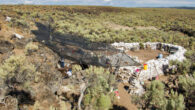
Since the 1970s, monumental stone structures now known as mustatils (previously known as ‘gates’) have been documented across Saudi Arabia. However,...

Mar 6, 2023 by News Staff

Khufu’s Pyramid is one of the largest archaeological monuments all over the world, which still holds many mysteries. In 2016 and 2017, the ScanPyramids...

Feb 10, 2023 by Enrico de Lazaro

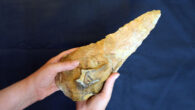
Oldowan tools, consisting of stones with one to a few flakes removed, are the oldest widespread and temporally persistent hominin tools. The oldest of...

Feb 9, 2023 by News Staff

The Hittites were one of the great powers in the ancient world across almost five centuries, between 1650 and 1200 BCE, with an empire centered in Anatolia...

Feb 7, 2023 by News Staff

Archaeologists have unearthed a rich assemblage of human-accumulated terrestrial and marine faunal remains, including those of several crab species, in...

Feb 3, 2023 by Enrico de Lazaro

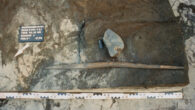
Scientists have found fragments a human-made projectile point in a rib of an American mastodon (Mammut americanum) from the Manis site, Washington, the...

Feb 2, 2023 by Enrico de Lazaro

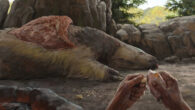
Straight-tusked elephants (Palaeoloxodon antiquus) were the largest terrestrial mammals of the Pleistocene epoch, present in Europe and western Asia between...

Jan 24, 2023 by The Conversation

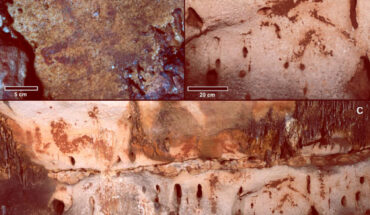
Neanderthal art was perhaps more abstract than the stereotypical figure and animal cave paintings Homo sapiens made after Neanderthals disappeared about...

Jan 23, 2023 by News Staff

Archaeologists excavating near Scarborough in North Yorkshire, Britain, have uncovered the remains of a small settlement — including bone, antler...

Jan 11, 2023 by News Staff

Archaeologists from Nordjyske Museer have unearthed the remains of a Viking-age structure near the village of Hune in Denmark. The 1,000-year-old remains...

Jan 10, 2023 by News Staff

Ancient Roman concretes have survived millennia, but mechanistic insights into their durability is an enigma. To solve the mystery, researchers from MIT...

Jan 9, 2023 by News Staff

According to a paper by Washington State University anthropologist Rachel Horowitz, the ruling Maya elite in the K’iche’ region of what is now Guatemala...

Jan 6, 2023 by News Staff

In at least 400 European caves such as Lascaux, Chauvet and Altamira, Upper Paleolithic humans drew, painted and engraved non-figurative signs from at...

Dec 26, 2022 by News Staff

The hoard was in a wooden box and contained 15 silver tetradrachma coins from the reign of Antiochos IV Epiphanes, a Hellenistic king who ruled the Seleucid...

Dec 26, 2022 by News Staff

Archaeologists have unearthed an assemblage of 14 stemmed projectile points at the Cooper’s Ferry site, located on a terrace of the lower Salmon River...

Dec 23, 2022 by Enrico de Lazaro

Researchers from the University of Tübingen and elsewhere have unearthed the cutmarked bones of cave bears at the Middle Pleistocene site of Schöningen...