Archaeology News

Nov 16, 2018 by News Staff

An ancient Egyptian Calendar of Lucky and Unlucky Days assigns luck with the period of 2.85 days. Previous astronomical, astrophysical and statistical analyses of the calendar support the idea that this was the period of the eclipsing binary star Algol approximately 3,000 years ago. However, next to nothing is known about who recorded Algol’s period into the calendar and especially how. In a paper published in the journal Open Astronomy, University...

Nov 15, 2018 by News Staff

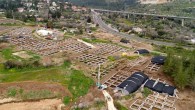
Archaeologists in Greece have unearthed what they believe are the remnants of the long-lost ancient city of Tenea. An aerial view of the archaeological...

Nov 12, 2018 by News Staff

Cave paintings in Lubang Jeriji Saléh, a limestone cave in East Kalimantan, Indonesian Borneo, have been dated to at least 40,000 years ago. A rock painting...

Nov 7, 2018 by News Staff

An international team of archaeologists from the French Institute for Oriental Archaeology in Cairo, Egypt, and the University of Liverpool, UK, has discovered...

Nov 6, 2018 by News Staff

A team of archaeologists from the Museum of London Archaeology (MOLA) has uncovered keratin ‘teeth’ of lamprey at a site near Mansion House station...

Nov 5, 2018 by News Staff

An international team of scientists has found that the upper Amazon region gave birth to the domesticated Theobroma cacao, the plant from which chocolate...

Oct 30, 2018 by News Staff

Israel Antiquities Authority archaeologists have uncovered a 1,700-year-old floor mosaic at the city of Lod (ancient Lydda). The newly-discovered mosaic...

Oct 26, 2018 by News Staff

Through excavation of the Debra L. Friedkin site northwest of Austin, Texas, a team of archaeologists has identified a particular style of projectile point...

Oct 24, 2018 by News Staff

Marine archaeologists from the Black Sea Maritime Archaeology Project (Black Sea MAP) have discovered the 2,400-year-old intact shipwreck of an ancient...

Oct 18, 2018 by News Staff

An analysis of ancient food proteins preserved in ceramic vessels found at the key early farming site of Çatalhöyük in central Anatolia, in what is...

Oct 9, 2018 by News Staff

Like the ancient Roman, Asian, and other civilizations, the ancient Maya produced salt and salted fish — storable commodities for marketplace trade,...

Oct 5, 2018 by News Staff

Residue on ceramic potsherds found at an archaeological site on the island of Pulau Ay (Ai), Indonesia, shows the nutmeg (Myristica fragrans) was used...

Sep 18, 2018 by News Staff

An international group of archaeologists has found a carved limestone altar at the Maya site of La Corona, located in jungle forest of the Petén in Guatemala. Archaeologist...

Sep 17, 2018 by News Staff

The ancient Maya routinely captured and traded wild jaguars (Panthera onca) and pumas (Puma concolor) for symbolic and ritual purposes, according to an...

Sep 17, 2018 by News Staff

An international team of researchers from Stanford University and the University of Haifa has found the oldest archaeological evidence of cereal-based...

Sep 14, 2018 by News Staff

A cross-hatched pattern drawn with an ochre crayon on a small piece of siliceous rock (silcrete) is 73,000 years old. It pre-dates the earliest previously...

Sep 11, 2018 by News Staff

According to a new study published in the journal PLoS ONE, turtles served as more than tasty treats for Native American tribes throughout North America;...

Sep 7, 2018 by News Staff

An analysis of fatty residue in pottery from two Neolithic archaeological sites in Croatia has revealed evidence of fermented dairy products (soft cheeses...

Sep 4, 2018 by News Staff

New research published in the journal PeerJ demonstrates that a technique used to produce ‘Late Acheulean’ handaxes is likely to have needed a modern...

Aug 30, 2018 by News Staff

The transition from Neanderthals to modern humans in Europe occurred during a period of recurring cold climate cycles. In a new study, a team of researchers...