Archaeology News

Jan 28, 2020 by News Staff

Neanderthals were once widespread across Europe and western Asia. They also penetrated into the Altai Mountains of southern Siberia, but the geographical origin of these populations and the timing of their dispersal remain elusive. Archaeologists excavating Chagyrskaya Cave in the Altai foothills have found 90,000 stone artifacts, numerous bone tools, 74 Neanderthal fossils, and animal and plant remains in 59,000- to 49,000-year-old deposits. The...

Jan 22, 2020 by The Conversation

The blue monkeys painted on the walls of Akrotiri on the Greek island of Santorini are among many animals found in the frescoes of this 3,600-year-old...

Jan 16, 2020 by News Staff

Shell fishing was a common activity of Neanderthals, according to new research led by University of Colorado, Boulder archaeologists. Homo neanderthalensis...

Jan 9, 2020 by Enrico de Lazaro

Archaeologists have unearthed 170,000-year-old whole, charred rhizomes of flowering plants from the genus Hypoxis in a cave in southern Africa. These botanical...

Jan 3, 2020 by Sergio Prostak

A Roman merchant ship and its amphorae cargo have been found lying at the bottom of Ionian Sea, the eastern Mediterranean, around 2,000 years after it...

Dec 26, 2019 by News Staff

A team of archaeologists from the University of Cincinnati has found two Bronze Age tombs in Pylos, an ancient city on the southwest coast of Greece, while...

Dec 20, 2019 by News Staff

An international team of researchers has pinpointed the first comprehensive age for the last known occurrence of the early hominin species Homo erectus. This...

Dec 18, 2019 by Sergio Prostak

An international team of scientists has successfully sequenced ancient DNA extracted from a 5,700-year-old piece of chewed birch pitch from southern Denmark....

Dec 16, 2019 by News Staff

Ancient inhabitants of Easter Island (also known as Rapa Nui) likely believed their megalithic statues called moai stimulated agricultural food production,...

Dec 13, 2019 by News Staff

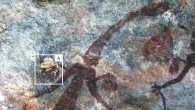
Archaeologists excavating the limestone cave of Leang Bulu’ Sipong 4 on the Indonesian island of Sulawesi have discovered a painting that is approximately...

Nov 25, 2019 by News Staff

A team of Japanese archaeologists has identified 143 new geoglyphs in the Nazca Desert, southern Peru. A geoglyph of a human. Image credit: Yamagata University. The...

Nov 14, 2019 by News Staff

Climate-related megadroughts built the foundation for the collapse of the Neo-Assyrian Empire (912 to 609 BCE), the largest and most powerful empire of...

Nov 4, 2019 by Enrico de Lazaro

A cut-marked eagle phalange recovered from Foradada Cave in Spain suggests that Iberian Neanderthals used the birds’ talons as bead-like objects. The...

Oct 28, 2019 by News Staff

Middle Paleolithic hominins such as Neanderthals not only controlled fire, but also mastered the ability to generate it, according to new research led...

Oct 25, 2019 by News Staff

The Akkadian Empire, the first united empire in Mesopotamia, was established around 2300 BCE and abruptly collapsed two centuries later. According to a...

Oct 22, 2019 by News Staff

For over a century, excavations in Jerusalem have been uncovering segments of the city’s Roman-period network of streets, particularly the so-called...

Oct 17, 2019 by News Staff

Archaeologists have unearthed a collection of 31 metal objects, including a bronze tool with a birch handle, a knife, a chisel, bronze cylinders, and ingot...

Oct 4, 2019 by News Staff

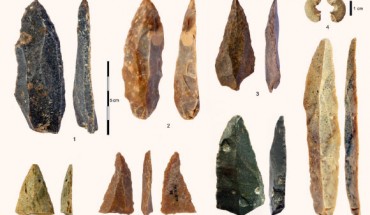
An international team of archaeologists has found a collection of microliths — small, retouched, often-backed stone tools — at the cave site...

Sep 30, 2019 by News Staff

A group of archaeologists from Cotswold Archaeology and Kier Construction has uncovered the remains of a previously unknown Roman military site —...

Sep 27, 2019 by News Staff

At least three hominins (Denisovans, Neanderthals, and early Homo sapiens) and large cave-dwelling carnivores (hyena, wolves, and even bears) used Denisova...