Archaeology News

Dec 29, 2016 by News Staff

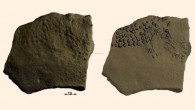
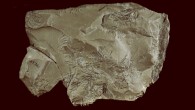
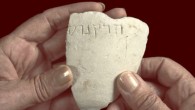
Archaeologists digging at a site in the City of David, in the Jerusalem Walls National Park, have found a fragment of a rare ancient bowl. The fragment of the 2,100-year-old stone bowl, which is engraved with the name Hyrcanus. Image credit: Clara Amit / Israel Antiquities Authority. The bowl fragment — made from chalk — dates to about 100 BC (Hasmonean period) and bears the name ‘Hyrcanus’ in Hebrew script. “This is one of the earliest...

Dec 26, 2016 by News Staff

Israel Antiquities Authority archaeologists working at Yehud in the Central District of Israel have uncovered an ancient ceramic jug, about 3,800 years...

Dec 22, 2016 by News Staff

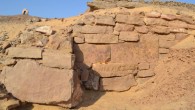
Archaeologists from the University of Birmingham and the Egypt Exploration Society (EES) Qubbet el-Hawa Research Project (QHRP) yesterday announced the...

Dec 21, 2016 by News Staff

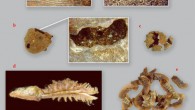
An international team of archaeologists has discovered the earliest evidence of humans processing plants for food found anywhere in the world. The findings...

Dec 19, 2016 by News Staff

A novel technique developed by a team of researchers in Australia has made it possible to produce some of the first reliable radiocarbon dates for Australian...

Dec 13, 2016 by News Staff

An international team of archaeologists from Sweden, Greece and the United Kingdom is exploring the ruins of a previously unknown ancient city at the village...

Dec 6, 2016 by News Staff

A research team led by Liverpool John Moores University scientists has discovered what could be the world’s very first polluted river, contaminated 7,000...

Dec 5, 2016 by News Staff

A pair of mummified knees on display in the Egyptian Museum in Turin, Italy, belongs to Egyptian Queen Nefertari, the favorite wife of Pharaoh Ramesses...

Dec 2, 2016 by News Staff

Bitumen — a rare, tar-like material — from the Middle East is present in the 7th century Anglo-Saxon ship-burial at Sutton Hoo, Suffolk, UK,...

Nov 27, 2016 by News Staff

New research on three archaeological sites of the famed Indus Valley civilization (3000-1500 BC) in north-west India has revealed that domesticated rice...

Nov 24, 2016 by News Staff

According to a new study by Florida State University researchers, Native Americans were keeping eastern wild turkeys (Meleagris gallopavo silvestris) as...

Nov 23, 2016 by News Staff

According to an international team of scientists who have sequenced the genome of a 5,310-year-old maize cob from the Tehuacan Valley, the maize (Zea mays)...

Nov 22, 2016 by News Staff

A team of archaeologists excavating the Mitla Fortress, a Zapotec site in Oaxaca, Mexico, dating to the Classic to Early Postclassic period (300-1200 CE),...

Nov 16, 2016 by News Staff

An international research group has found evidence that humans have been utilizing milk and dairy products across the northern Mediterranean region from...

Nov 15, 2016 by Enrico de Lazaro

A team of researchers headed by Lund University’s Professor Dan Hammarlund has uncovered an exceptionally well-preserved Mesolithic site off the Baltic...

Nov 9, 2016 by News Staff

Archaeological excavations at Abydos, Egypt, have revealed the remains of a subterranean boat burial dating to the reign of the pharaoh Senwosret III (c....

Nov 6, 2016 by News Staff

An international team of archaeologists has uncovered the remains of a large Bronze Age settlement not far from the town of Dohuk in northern Iraq. The...

Nov 4, 2016 by News Staff

Nan Madol, an ancient administrative and the former capital of the Micronesian island of Pohnpei, was the earliest among the Pacific islands to be ruled...

Nov 1, 2016 by News Staff

Archaeologists with the Israel Antiquities Authority (IAA) have uncovered a papyrus fragment that includes the earliest reference to Jerusalem in an extra-Biblical...

Oct 26, 2016 by News Staff

According to a new study, Stone Age humans may have hunted Eurasian cave lions (Panthera leo spelaea) for their pelts, perhaps contributing to their extinction. Cave...