Genetics News

Feb 13, 2026 by Sergio Prostak

Between 73,000 and 20,000 years ago (Late Pleistocene), the Japanese Archipelago was inhabited by cave lions (Panthera spelaea), according to a new genetic and proteomic analysis of fossilized felid remains previously attributed to tigers (Panthera tigris). Cave lions painted in the Chauvet Cave, France. Lions and tigers were widespread apex predators during the Late Pleistocene and integral components of East Asian megafauna. Cave lions predominantly...

Jan 14, 2026 by Enrico de Lazaro

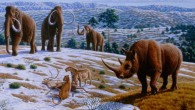
The woolly rhinoceros (Coelodonta antiquitatis) is a cold-adapted herbivore that went extinct around 14,000 years ago, but little is known about their...

Jan 2, 2026 by Enrico de Lazaro

A research team led by Max Planck Institute for Evolutionary Anthropology scientists has generated the high-quality genome assembly of a Denisovan using...

Dec 23, 2025 by News Staff

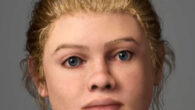
The skeletal remains of an individual colloquially referred to as Beachy Head Woman were re-discovered in the Eastbourne Town Hall collection in 2012,...

Dec 3, 2025 by News Staff

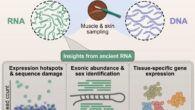
Scientists have successfully extracted and sequenced ancient RNA from permafrost-preserved tissues of 10 woolly mammoths. One of these, dated to be 39,000...

Nov 28, 2025 by News Staff

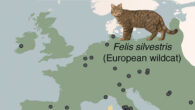
The domestic cat (Felis catus) descends from the African wildcat (Felis lybica lybica). Its global distribution alongside humans testifies to its successful...

Nov 28, 2025 by Natali Anderson

The genome of the vampire squid (Vampyroteuthis sp.) is one of the largest animal genomes, exceeding 10 billion base pairs. The vampire squid (Vampyroteuthis...

Nov 25, 2025 by News Staff

Although dogs (Canis lupus familiaris) and wolves (Canis lupus) can interbreed and produce fertile offspring, hybridization between the two is far more...

Nov 25, 2025 by News Staff

Wolves, the wild ancestor of dogs, are the only large carnivores that have undergone domestication by humans. Yet, it remains unclear if this process took...

Nov 17, 2025 by News Staff

Tea plant (Camellia sinensis) is among the most significant beverage crops globally. The size of tea buds not only directly affects the yield and quality...

Nov 11, 2025 by News Staff

University of Edinburgh scientist Hannah Long and colleagues show how a region of Neanderthal DNA is better at activating a jaw-forming gene than the human...

Nov 3, 2025 by Enrico de Lazaro

The Crimean Peninsula in Ukraine contains key Middle to Upper Paleolithic transitional archaeological sites, including the site of Starosele, where archaeologists...

Oct 29, 2025 by Natali Anderson

Oat (Avena sativa) grain is a traditional human food that is rich in dietary fiber and contributes to improved human health. Interest in the crop has surged...

Oct 20, 2025 by News Staff

Several hominids — Australopithecus africanus, Paranthropus robustus, early Homo sp., Gigantopithecus blacki, Pongo sp., Papio sp., Homo neanderthalensis,...

Oct 13, 2025 by Enrico de Lazaro

A small, isolated population of common hippos (Hippopotamus amphibius) was present in the Upper Rhine Graben in southwestern Germany during the middle...

Sep 15, 2025 by News Staff

The second half of the first millennium CE in Central and Eastern Europe was accompanied by fundamental cultural and political transformations. This period...

Sep 15, 2025 by News Staff

Ancient DNA has been useful in reconciling deep evolutionary relationships and responses to ecological changes in elephants and their relatives. In new...

Sep 11, 2025 by News Staff

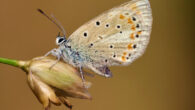
Scientists at the Wellcome Sanger Institute and the Institut de Biologia Evolutiva in Spain have sequenced the genome of a female Atlas blue butterfly...

Sep 4, 2025 by News Staff

In a new study, scientists analyzed ancient microbial DNA from 483 mammoth remains spanning over 1 million years, including 440 newly-sequenced and unpublished...

Aug 21, 2025 by News Staff

Thousands of years ago, ancient Homo sapiens undertook a treacherous journey, crossing hundreds of km of ice over the Bering Strait to the unknown world...