Stromatolites are solid, laminar structures reflecting complex interplays between microbial communities and their environment.
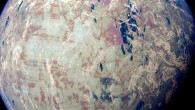
Hand sample of Dresser Formation...
Radiation resistance of microbes is a key parameter in considering survivability of microbes over geologic times on the frigid, arid surface of Mars that...
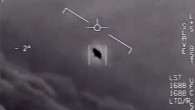
Unidentified aerial phenomena (UAPs), popularly known as UFOs, are of interest for both national security and air safety and NASA’s independent study...
Penn State astronomers Macy Huston and Jason Wright work on the search for extraterrestrial intelligence (SETI). They try to characterize and detect technosignatures...
Methylated gases are made when organisms add a carbon and three hydrogen atoms to an undesirable chemical element. Called methylation, this process can...
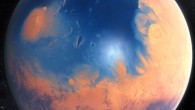
The subsurface of Mars during the Noachian period was likely to have been habitable for microorganisms that feed on hydrogen and produce methane, according...
Nitrous oxide (also known as laughing gas) — a product of microbial nitrogen metabolism — is a compelling exoplanet biosignature gas with distinctive...
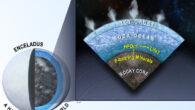
Enceladus is one of the prime targets in the search for life in our Solar System. Observations made by NASA’s Cassini spacecraft show that this small...
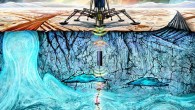
Someday, dozens of tiny swimming robots could whisk through the water beneath the icy shell of Jupiter’s moon Europa or Saturn’s moon Enceladus, looking...
In new research, a team of scientists at the University of Cambridge has tested the ‘life in the Venusian clouds’ hypothesis.
Jordan et al. demonstrate...
NASA’s independent study team will examine unidentified aerial phenomena (UAPs) from a scientific perspective. It will focus on identifying available...
In a new paper published in the International Journal of Astrobiology, Houston Community College researcher Irina Romanovskaya proposes that free-floating...
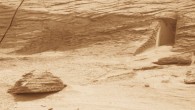
On May 7, 2022, the Mast camera (Mastcam) onboard NASA’s Curiosity rover took a photo which appeared to show a doorway carved into the Martian rock.
This...
For over 70 years, astronomers have been scanning for radio or optical signals from other civilizations in the search for extraterrestrial intelligence...
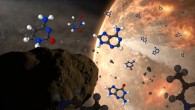
Using state-of-the-art analytical techniques, researchers have detected diverse suites of nucleobases — including canonical base pairs (e.g., adenine-uracil,...
In 2017, paleontologists found 3.75- to 4.28-billion-year-old microscopic filaments and tubes, which appeared to have been made by iron-loving bacteria,...
The case for methane as a biosignature stems from its instability in the planet’s atmosphere. Because photochemical reactions destroy atmospheric methane,...
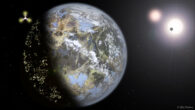
With thousands of discovered exoplanets and new missions that will explore our Solar System, the search for life in the Universe has entered a new era....
Possible lifeforms in the Venusian clouds could be setting off a cascade of chemical reactions that is making the environment much more habitable, according...