An international collaboration of researchers from the Deep Carbon Observatory (DCO) has made several important discoveries, including how much and what...
A new study, published in the Astrophysical Journal, suggests that if a 1- to 2-megawatt (MW) laser were focused through a 30- to 45-m telescope and aimed...
Caltech researcher Vlada Stamenković and co-authors calculated that if liquid water exists on the Red Planet, it could contain more oxygen than previously...
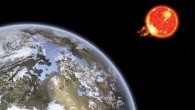
Stellar superflares from young red dwarfs may make conditions uninhabitable on fledgling planets, according to the new results of the Habitable Zones and...
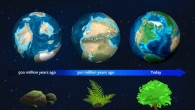
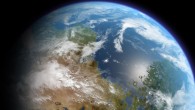
By looking at Earth’s natural history, Cornell University’s Carl Sagan Institute astrobiologists Jack O’Malley-James and Lisa Kaltenegger have found...
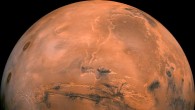
Mars had right conditions for subsurface life some 3.7 to 4.1 billion years ago (Noachian period), according to new research from Brown University.
An...
Astronomers at Breakthrough Listen, a scientific program in search for signs of intelligent life in the Universe, have applied machine-learning techniques...
Astronomers have largely assumed that water-world exoplanets would not support the cycling of minerals and gases that keeps the climate stable on Earth,...
Have Carl Sagan and astrobiologists been too hard on stellar flares? A new study imagines an alternative scenario where they power photosynthesis around...
Scientists from the University of Cambridge and the MRC Laboratory of Molecular Biology, UK, have identified a group of exoplanets where the same chemical...
There may be more habitable exoplanets than we previously thought, according to Pennsylvania State University researchers Bradford Foley and Andrew Smye,...
Jupiter’s moon Europa is one of the most compelling targets in the search for life beyond Earth. However, its water-ice surface is affected by the harsh...
There may have been two windows of habitability for the Moon, according to new research by University of London’s Professor Ian Crawford and Dr. Dirk...
A team of leading astronomers, biologists and geologists have come together under the Nexus for Exoplanet System Science (NExSS), a NASA research coordination...
An international team of astronomers from the United States, Australia, and Brazil has identified 121 giant exoplanets in the habitable zones of their...
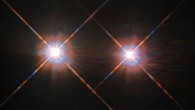
New observations by NASA’s Chandra X-ray Observatory indicate the two brightest stars in the triple-star system Alpha Centauri are not pummeling any...
There could be a flaw in the search for atmospheric oxygen as a signature of life around most of our nearby exoplanets. A team from the University of Washington...
NASA’s Mars rover Curiosity has detected organic molecules in 3-billion-year-old sedimentary rocks at the base of the Murray formation at Pahrump Hills,...
As the population of a technologically advanced civilization grows, it uses more and more of its planet’s resources. By consuming the resources, the...
Iron-rich rocks near ancient lake sites on Mars are the most promising and best understood astropaleontological targets, according to new research led...