Anthropology News

Jan 5, 2026 by Sergio Prostak

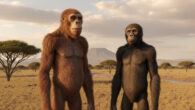
For more than two decades, Sahelanthropus tchadensis — a very early (6.7 to 7.2 million years old) hominin species discovered in Chad in 2001 — has hovered at the center of a contentious question: did one of humanity’s earliest relatives walk upright? New research led by New York University paleoanthropologists adds the strongest evidence yet that it did. Their findings suggest that Sahelanthropus tchadensis was an African ape-like early...

Jan 2, 2026 by Enrico de Lazaro

A research team led by Max Planck Institute for Evolutionary Anthropology scientists has generated the high-quality genome assembly of a Denisovan using...

Dec 30, 2025 by Enrico de Lazaro

In a new paper published this month in the journal iScience, researchers from the University of Tübingen and elsewhere present a multidisciplinary analysis...

Dec 23, 2025 by News Staff

The skeletal remains of an individual colloquially referred to as Beachy Head Woman were re-discovered in the Eastbourne Town Hall collection in 2012,...

Dec 22, 2025 by News Staff

The Middle to Upper Paleolithic Transition approximately 50,000 to 38,000 years ago is marked by the decline and extinction of Neanderthals, the emergence...

Dec 16, 2025 by News Staff

Paleoanthropologists have examined and reconstructed DAN5, a 1.5-million-year-old fossilized skull of early Homo erectus found in Gona in the Afar region...

Dec 16, 2025 by News Staff

New research led by scientists from the University of Cambridge and Latrobe University challenges the classification of the Little Foot fossil as Australopithecus...

Dec 10, 2025 by News Staff

Archaeologists have unearthed 400,000-year-old heated sediments and fire-cracked flint handaxes alongside two fragments of pyrite — a mineral used...

Dec 9, 2025 by News Staff

Homo floresiensis abandoned Liang Bua — a cave this small-bodied human species had occupied for around 140,000 years — during severe drought...

Nov 28, 2025 by News Staff

In 2009, paleoanthropologists found eight bones from the foot of an ancient human ancestor in 3.4-million-year-old sediments at the paleontological site...

Nov 19, 2025 by News Staff

Kissing occurs in most living large apes, and likely also occurred in Neanderthals, first evolving in the ancestor to this group 21.5-16.9 million years...

Nov 11, 2025 by News Staff

University of Edinburgh scientist Hannah Long and colleagues show how a region of Neanderthal DNA is better at activating a jaw-forming gene than the human...

Nov 4, 2025 by Natali Anderson

Archaeologists have discovered Oldowan stone tools in three distinct archaeological horizons, spanning approximately 300,000 years (2.75 to 2.44 million...

Nov 3, 2025 by Enrico de Lazaro

The Crimean Peninsula in Ukraine contains key Middle to Upper Paleolithic transitional archaeological sites, including the site of Starosele, where archaeologists...

Oct 21, 2025 by News Staff

Paleoanthropologists have unearthed and examined a hominin partial skeleton that includes hand and foot bones unambiguously associated with skull elements...

Oct 20, 2025 by News Staff

Several hominids — Australopithecus africanus, Paranthropus robustus, early Homo sp., Gigantopithecus blacki, Pongo sp., Papio sp., Homo neanderthalensis,...

Oct 20, 2025 by News Staff

In new research, paleoanthropologists from the United States and Canada analyzed the morphology of a hominin talus (large bone in the ankle that joins...

Oct 7, 2025 by News Staff

The transport of Rapa Nui’s (Easter Island) monumental moai statues has been debated for over a century. Based on a systematic analysis of 962 moai,...

Oct 7, 2025 by News Staff

The culture that thrived at Teotihuacan in the Classic period has a unique place in Mesoamerican history. Today, it is held as an emblem of the Mexican...

Sep 25, 2025 by News Staff

Diverse forms of Homo, including Homo longi, coexisted during the Middle Pleistocene. Whether these fossil humans represent different species is debated....