Geophysics News

Nov 20, 2014 by News Staff

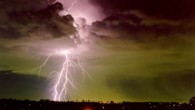
The Sun plays a significant role in the generation of lightning strikes on Earth, according to a new study that found that over a 5-year period the United Kingdom experienced 50 percent more lightning strikes when the magnetic field of our planet was skewed by that of the Sun. According to the new study, the solar magnetic field causes lightning strikes on our planet. Image credit: University of Minnesota. “We’ve discovered that the Sun’s...

Nov 19, 2014 by News Staff

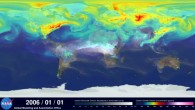
A new computer model called GEOS-5 has provided a high-resolution look at how carbon dioxide (CO2) – the key driver of global warming – moves...

Oct 17, 2014 by News Staff

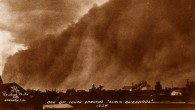
Using a reconstruction of North American drought history over the past millennium, a team of researchers from NASA and the Columbia University’s Lamont-Doherty...

Oct 16, 2014 by News Staff

A team of scientists led by Dr Leonardo Sagnotti of National Institute of Geophysics and Volcanology in Rome, Italy, has found evidence that the most recent...

Oct 3, 2014 by News Staff

Using data from NASA’s and European Space Agency’s satellites that measure variations in gravitational field, a multinational team of researchers...

Jul 30, 2014 by News Staff

Five-meter-high waves have been detected in the middle of the Arctic Ocean by Dr Jim Thomson of the University of Washington and Dr Erick Rogers of the...

Jul 19, 2014 by News Staff

A team of geophysicists led by Dr Stephane Rondenay from the University of Bergen has made a detailed picture of Mount Rainier’s deep volcanic plumbing. Aerial...

Jun 16, 2014 by News Staff

Geophysicists from the United States and Sweden have discovered ice blocks as tall as city skyscrapers at the very bottom of the Greenland Ice Sheet. The...

May 17, 2014 by News Staff

How does lightning travel through the air? A new study led by Dr Chris Scott from the University of Reading, UK, suggests that high-energy particles accelerated...

Apr 10, 2014 by News Staff

A huge asteroid, up to five times larger than the rock thought to have wiped out the dinosaurs, crashed into Earth more than 3 billion years ago, say researchers...

Mar 11, 2014 by News Staff

New research, reported in the Proceedings of the National Academy of Sciences, suggests that the steam and heat from volcanoes may have allowed many plant...

Jan 10, 2014 by News Staff

In a large-scale lab and field study, a multinational team of researchers has revealed the origins of huge underwater waves. This satellite image shows...

Jan 4, 2014 by News Staff

Earthquake lights – a rare luminous phenomenon that appears in the sky during or before seismic activity or volcanic eruptions – are more likely...

Nov 18, 2013 by News Staff

U.S. seismologists have made a surprising discovery near Mount Sidley in Marie Byrd Land, Antarctica – an active volcano smoldering under 1.2 km...

Nov 6, 2013 by News Staff

A new study published this week in the Proceedings of the National Academy of Sciences correlates 93 small earthquakes near Snyder, Texas between 2009...

Oct 8, 2013 by News Staff

New research, reported in the Geophysical Research Letters, changes our understanding of how the Hawaiian Islands formed. Haleakala Crater in East Maui...

Oct 7, 2013 by News Staff

According to new research reported in the Proceedings of the National Academy of Sciences, water vapor changes in the stratosphere contribute to warmer...

Oct 7, 2013 by News Staff

In a new paper published in the journal Nature Geoscience, British researchers have reported the discovery of giant ice channels beneath the floating Filchner-Ronne...

Sep 20, 2013 by Enrico de Lazaro

According to a new study published in the journal Science, a magnitude 8.3 earthquake that struck 609 km beneath the Sea of Okhotsk near Kamchatka, Russia,...

Sep 17, 2013 by News Staff

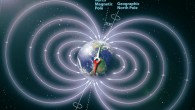
British scientists have answered the question about which direction the centre of our planet spins. The inner core, made up of solid iron, superrotates...