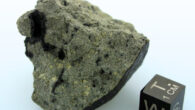
An international team of researchers has detected abundant polyaromatic compounds, organic magnesium compounds, aliphatic branched carboxylic acids, aldehydes,...
The El Ali meteorite, a 15.2-ton iron meteorite found in 2020 near the tiny town of El Ali in Somalia, contains at least two new minerals: elaliite and...
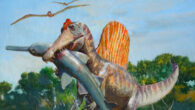
Spinosaurus aegyptiacus, a sail-backed theropod dinosaur that lived in what is now North Africa during the Cretaceous period, about 95 million years ago,...
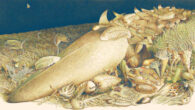
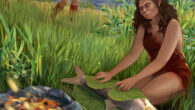
Archaeologists have found the 780,000-year-old remains of a cooked carp-like fish at the wetland Acheulean site of Gesher Benot Ya’aqov in Israel.
Ancient...
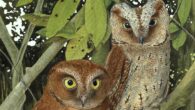
Ornithologists have discovered a new species of the scops-owl genus Otus inhabiting the forests of Príncipe Island, part of the Democratic Republic of...
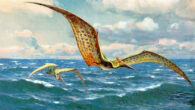
Paleontologists have identified a new genus and species of pteranodontian pterosaur from fossilized bones found in the Republic of Angola.
An artist’s...
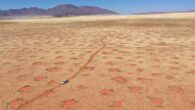
New research led by University of Göttingen scientists shows that grass death in fairy circles occurs immediately after rainfall due to plant water stress...
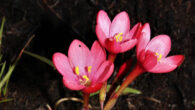
Botanists have described a new high-altitude species of the genus Geissorhiza from the Langeberg Mountains of South Africa.
The Cherry Satin flower (Geissorhiza...
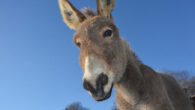
Domestic donkeys (Equus asinus) have been important to humans for thousands of years, being the primary source of work and transport for many cultures....
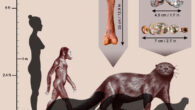
Paleontologists have described a new species of the extinct otter genus Enhydriodon from fossilized teeth and bones found in the Lower Omo Valley in Ethiopia.
Reconstruction...
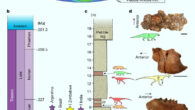
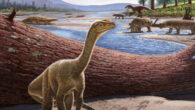
In addition to the discovery of Mbiresaurus raathi, Africa’s oldest known dinosaur species, Yale University paleontologist Christopher Griffin and his...
Mbiresaurus raathi lived in what is now Zimbabwe during the Carnian age of the Triassic period, approximately 230 million years ago.
Life reconstruction...
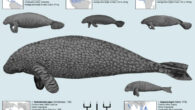
The sea cows originated in the Tethys Sea, between southern Europe and northern Africa, during the latest part of the Paleocene epoch, according to a new...
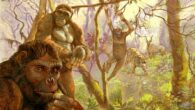
Paleoanthropologists have examined three fossilized limb bones of Sahelanthropus tchadensis, one of the oldest known species in the human family tree.
Representation...
Thalassotitan atrox, a species of mosasaur that swam in the Cretaceous oceans 66 million years ago, shows that these specialized marine creatures evolved...
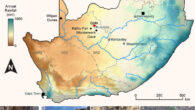
Detailed, well-dated palaeoclimate and archaeological records are critical for understanding the impact of environmental change on human evolution. In...
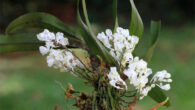
Rhipidoglossum pareense is endemic to the South Pare and West Usambara mountains of north-eastern Tanzania.
Rhipidoglossum pareense. Image credit: A. Hemp.
“Rhipidoglossum...
Researchers have carried out a comprehensive physical and cup quality assessment of Arabica coffee (Coffea arabica) from three regions in the Kafa Biosphere...