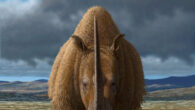
The extinction of the woolly rhinoceros (Coelodonta antiquitatis) at the onset of the Holocene remains an enigma, with conflicting evidence regarding its...
Kiyacursor longipes is the first species of ceratosaur known from the Early Cretaceous of Asia, extending the stratigraphic range of the dinosaur group...
Gigantopithecus blacki, the largest ever primate and one of the largest species of the southeast Asian megafauna, persisted in China from about 2 million...
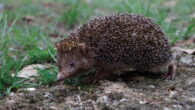
Researchers at the Smithsonian Institution’s National Museum of Natural History have performed a comprehensive taxonomic review of the soft-furred hedgehog...
New archaeological discoveries from Mongolia show that, despite a fragmentary archaeological record, horse cultures of the eastern Eurasian steppe were...
Scientists from Anhui Normal University and elsewhere have identified a new species of the hedgehog genus Mesechinus living the scrubland and subtropical...
In a 100-page monograph published in the journal Papers in Palaeontology, paleontologists have described ten new species of trilobites from the tuff-bearing...
Approximately 6% of the Altai Neanderthal genome was inherited from an ancient lineage of anatomically modern Homo sapiens that migrated from Africa to...
Our species, Homo sapiens, dispersed from Africa into Eurasia multiple times in the Middle and Late Pleistocene. According to new research led by Shantou...
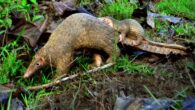
The newly-identified species, Manis mysteria, is the ninth known pangolin species or the fifth Asian one.
The Asian mysterious pangolin (Manis mysteria)...
Paleontologists from the Indian Institute of Technology and the Geological Survey of India have described a new genus and species of dicraeosaurid sauropod...
The fossilized remains of the Miocene-period ape species Anadoluvius turkae have been unearthed at the paleotological site of Çorakyerler in central Anatolia,...
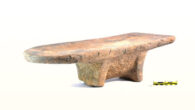
The 4,000-year-old network of ceramic water pipes unearthed at the archaeological site of Pingliangtai on the Central Plains of China represents an unprecedented...
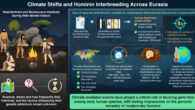
Looking at habitat overlap for Neanderthals and Denisovans, Pusan National University researcher Jiaoyang Ruan and colleagues found patterns of interbreeding...
Paleontologists have found several species of parasites, including Ascaridida eggs, in a 200-million-year-old coprolite probably produced by a crocodile-like...
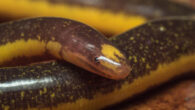
Living amphibians include frogs and salamanders and the limbless worm-like caecilians (order Gymnophiona). Caecilians have cylindrical bodies with a compact,...
Minimocursor phunoiensis is the earliest known neornithischian dinosaur from Southeast Asia as well as one of the best-preserved dinosaurs ever found in...
The global spice trade has played an essential role in world history. However, because of poor preservation conditions, archaeobotanical remains of spices...
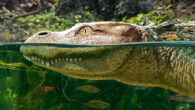
The newly-identified species is closely related to the Chinese alligator (Alligator sinensis), the only living representative of Alligatoridae (the crown-group...
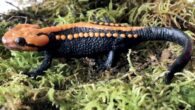
Scientists have described a new salamander species of the genus Tylototriton from evergreen montane forests on Ngoc Linh Mountain in the Central Highlands...