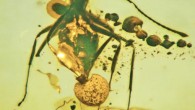
Amber exquisitely preserves the delicate organs of fossil flowers for millions of years. However, flower inclusions can be rare and usually do not exceed...
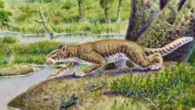
A new genus and species of saber-toothed mammalian carnivore has been identified from a fossil found in California, the United States.
An artist’s impression...
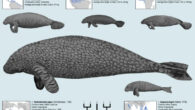
The sea cows originated in the Tethys Sea, between southern Europe and northern Africa, during the latest part of the Paleocene epoch, according to a new...
Paleontologists have identified a new genus and species of ancient gecko from an articulated near-complete skull found in Germany.
Geiseleptes delfinoi...
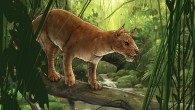
Paleontologists have discovered the fossilized remains of a bobcat-sized creature from a extinct lineage of carnivorous placental mammals.
Life reconstruction...
Nearly 63% of Afro-Arabian mammalian species went extinct approximately 30 million years ago (Oligocene epoch), after Earth’s climate shifted from swampy...
Dental cavities or caries is a common disease among modern humans, affecting almost every adult. New research shows that Microsyops latidens, a species...
An incomplete fossil record hampers reconstructing the early evolution of caimans (subfamily Caimaninae). In new research, paleontologists from Germany...
A new species of leaf beetle that lived nearly 49 million years ago (Eocene epoch) in what is now the United States has been named after Sir David Attenborough.
Pulchritudo...
New research shows that mean annual temperatures in southeast Australia gradually declined from 27 degrees Celsius during the Middle Eocene epoch to...
Paleontologists have identified two new species of palaeotheriid mammals from fossils found at the Eocene site of Zambrana in Alava, Spain.
Palaeotheriid...
In a paper published this month in the journal Fungal Biology, a duo of paleontologists from the United States and France described a new genus and species...
Hirmoneura messelense, a newly described species of nemestrinid fly that lived approximately 47.5 million years ago (Eocene period), pollinated flowers...
A new genus and species of caimanine alligatorid being named Chinatichampsus wilsonorum has been discovered by a team of paleontologists from Virginia...
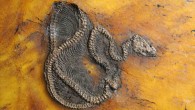
A new genus and species of medium-sized python that lived during the early-middle Eocene period has been identified from several nearly complete skeletons...
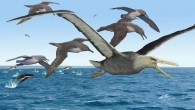
Paleontologists have described new fossils of pelagornithid birds from the middle Eocene Submeseta Formation on Seymour Island, Antarctica.
An artist’s...
A new genus and species of owl that lived 55 million years ago (Eocene epoch) has been identified from a partial skeleton found in Wyoming, the United...
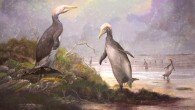
Paleontologists have discovered striking similarities between the fossilized bones of giant penguins that lived 62 million years ago in what is now New...
A new species of extinct quail-like bird has been identified from a fossil found in eastern Utah.
Reconstruction of Uintan paraortygid. Image credit: Thomas...