Wind-dispersed plants have evolved ingenious ways to lift their seeds. The common dandelion (Taraxacum officinale) uses a bundle of drag-enhancing bristles...
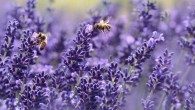
A team of scientists from Brock University and the University of British Columbia, Canada, has sequenced the genome of the English lavender (Lavandula...
A team of researchers from Australia, China and the United Kingdom has sequenced and analyzed the genome of the opium poppy (Papaver somniferum), a species...
A research team led by the University of Nebraska-Lincoln and Huazhong Agricultural University has identified two new fatty acids — named Nebraskanic...
A rare species of orangutan, a majestic tree, a beetle that looks like part of an ant, the world’s deepest-living fish, and the fossil of a marsupial...
Angiosperms (flowering plants) are neither as old as suggested by previous molecular studies, nor as young as a literal interpretation of their fossil...
An international group of paleontologists has found the oldest fossilized remains of insects from the order Lepidoptera known to date. The fossils, mostly...
A wide range of flowers produce not just signals that we can see and smell, but also ones that are invisible such as heat. According to new research from...
A team of researchers from the Institute of Chinese Materia Medica, China Academy of Chinese Medical Sciences, and the Amway Botanical Research Center...
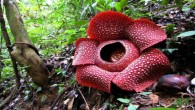
An international team of scientists from the United States and Indonesia has described a new species of flowering plant of the genus Rafflesia from the...
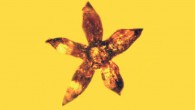
In a paper published recently in the journal Palaeodiversity, U.S. paleontologists described a new species of angiosperm flower, Tropidogyne pentaptera,...
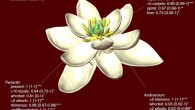
An international team of researchers at the eFLOWER project has reconstructed what the Earth’s ancestral angiosperm flowers might have looked like.
3D...
A new study published in the Botanical Journal of the Linnean Society documents evidence of an orchid fossil trapped in Baltic amber that dates back 45-55...
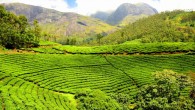
A multi-institutional team of researchers from China and the United States has sequenced the genome of the cultivated tea tree (Camellia sinensis).
A tea...
After only nine generations, the same plant species is larger and more fragrant if pollinated by bumblebees rather than flies, according to University...
Certain beetles are known to pollinate plants. New fossil evidence from Mexican and Dominican fossilized amber indicates that they were doing so 20 million...
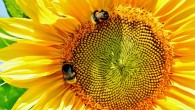
A team of scientists led by Prof. Stacey Harmer of the University of California, Davis, has discovered how sunflowers use their circadian clock, acting...
A group of scientists from Europe has harnessed new photonics technology to develop superhydrophobic, antibacterial metal surfaces, taking us a step closer...