New paleoclimate evidence shows that around 1.1 million years ago, the southern European climate cooled significantly and caused an extinction of archaic...
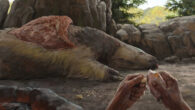
Archaeologists in Brazil say they have unearthed 25,000- to 27,000-year-old pendants made of bony material from the extinct giant ground sloth Glossotherium...
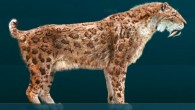
Skeletal disease may hamper the behavior of large predators both living and extinct. In new research, paleontologists from Evidensia Academy and the La...
Glacial cycles during the Early Pleistocene epoch are characterized by a dominant 41,000-year periodicity and amplitudes smaller than those of glacial...
Humans have extensively shaped animals and plants through domestication. Although wine and table grapes have been important culturally for thousands of...
Modern humans have populated Europe for more than 45,000 years. However, our knowledge of the genetic relatedness and structure of ancient hunter-gatherers...
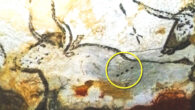
In at least 400 European caves such as Lascaux, Chauvet and Altamira, Upper Paleolithic humans drew, painted and engraved non-figurative signs from at...
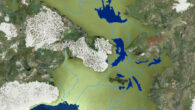
In new research, led by the University of California, Santa Cruz and Princeton University, scientists reconstructed the history of sea level at the Bering...
Dubbed the Taurasian tur, the newly-identified lineage is best represented by a 14,000-year-old genome sequenced from a specimen found in Direkli Cave,...
Studies of human fossils, and the DNA extracted from them, reveal a complex history of interbreeding between various human lineages over the past 100,000...
The gray wolf (Canis lupus) was the first species to give rise to a domestic population, and they remained widespread throughout the latest Ice Age when...
Nun cho ga is the most complete mummified mammoth found in North America.
Steppe mammoths. Image credit: Beth Zaiken / Centre for Palaeogenetics.
The near...
To test their hypothesis that the eastern moa (Emeus crassus), an extinct flightless bird from New Zealand, survived the Last Glacial Maximum (LGM) in...
Researchers from the University of Adelaide and elsewhere have sequenced and analyzed mitochondrial DNA from fossils of cave lions (Panthera spp.) and...
In a large-scale environmental DNA metagenomic study of ancient plant and mammal communities, an international team of researchers have analyzed 535 permafrost...
In a study of exposed outcrops of Lake Otero in New Mexico, the United States, archaeologists have discovered numerous human footprints dating to about...
Scientists have examined isotopes collected from the tusk of a woolly mammoth (Mammuthus primigenius) that lived in Alaska approximately 17,100 years ago,...
The oral microbiome plays key roles in human biology, health, and disease, but little is known about the global diversity, variation, or evolution of this...
Gray wolves (Canis lupus) from the Yukon Territory, Canada, survived the extinction at the end of the last Ice Age by adapting their diet over thousands...