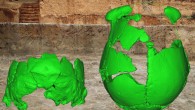
University of Kansas Professor David Frayer and co-authors have discovered multiple toothpick grooves on teeth of a Neanderthal individual who lived 130,000...
An international team of archaeologists has provided a window into one of the most exciting periods in human history — the transition between Neanderthals...
New research led by the Max Planck Institute for Evolutionary Anthropology (MPI-EVA) shows that Pleistocene cave sediments represent a rich source of ancient...
Neanderthals’ cognitive abilities are a hotly debated topic, but a bird bone fragment found at a Middle Paleolithic site in Crimea, Ukraine, features...
An analysis of ancient DNA entrapped in Neanderthal dental calculus (calcified dental plaque) has revealed the complexity of Neanderthal behavior, including...
Two partial archaic human skulls unearthed in central China provide a new window into the biology and populations patterns of the immediate predecessors...
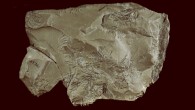
An unusual limestone rock found at an archaeological site in Croatia indicates that Neanderthals were capable of incorporating symbolic objects into their...
In the Arctic, the Inuits have adapted to cold and a seafood diet. After the first genomic analysis of Greenlandic Inuits, a region in the genome containing...
According to a team of researchers at the University of California, Davis, only a very small percentage of Neanderthal DNA is present in the genomes of...
Dr. Raj Kurupati and colleagues from the Wistar Institute, University of Pennsylvania, and Duke University Medical Center showed that an individual’s...
An international team of researchers led by the Max Planck Institute for Evolutionary Anthropology in Germany has demonstrated that Neanderthals were responsible...
A team of scientists led by Dr. Ole Andreassen of the University of Oslo in Norway and the University of California, San Diego, has found evidence for...
The genome of Neanderthals contained harmful gene variants that made them around 40 percent less reproductively fit than modern humans. And non-Africans...
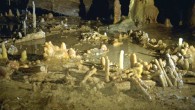
An international team of archaeologists working in Bruniquel Cave in France has identified mysterious ring-like constructions that were built by early...
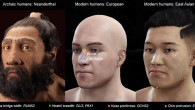
A multinational team of researchers led by University College London (UCL) has found four genes that impact nose shape.
Image showing variation between...
Neanderthals showed signs of nutritional stress during periods of extreme cold, according to a new study published in the July 2016 issue of the Journal...
Analyses of genome-wide data from 51 Eurasians from 7,000 – 45,000 years ago reveal two big changes in prehistoric human populations that are closely...
A new study published in the American Journal of Physical Anthropology suggests that the transfer of infectious pathogens between populations of Neanderthals...
Neanderthal Y-chromosome genes disappeared from the genome of modern humans long ago, suggests a new study published this week in the American Journal...
Dr. David Reich from Harvard Medical School and his colleagues have produced a world map of Denisovan and Neanderthal ancestry in 120 diverse populations....