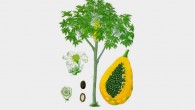
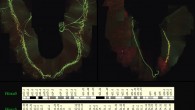
A computational analysis of the genomes of the papaya, poplar, grape, and a small flowering plant called Arabidopsis thaliana, has identified hundreds...
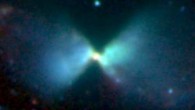
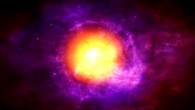
An international group of astronomers using the Submillimeter Array and the Combined Array for Millimeter-Wave Astronomy has found evidence of what might...
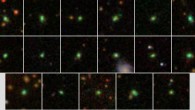
A team of astronomers, led by Dr Mischa Schirmer of the Gemini Observatory, using observations from ESO’s Very Large Telescope (VLT), the Gemini South...
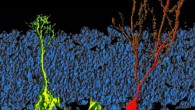
Scientists led by Prof Sebastian Jessberger of the University of Zurich’s Brain Research Institute, Switzerland, have discovered that neural stem cells...
A team of researchers at the New York University’s Langone Medical Center has discovered that two genes, called Hoxa5 and Hoxc5, play a critical role...
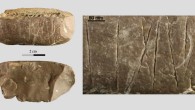
Chinese archaeologists have discovered a stunning 30,000-year-old engraved stone artifact in a collection of stone tools unearthed at the Paleolithic site...
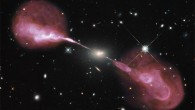
Astronomers using the Wide Field Camera 3 aboard NASA’s Hubble Space Telescope and the Karl G. Jansky Very Large Array radio telescope in New Mexico...
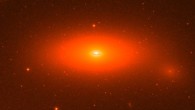
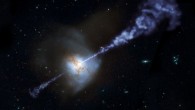
An international team of astronomers has discovered a black hole that could shake the foundations of current models of galaxy evolution.
This Hubble image...
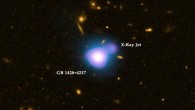
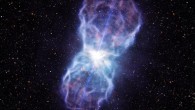
An international team of astronomers using ESO’s Very Large Telescope (VLT) has found a quasar with the most energetic outflow ever seen, at least five...
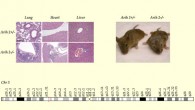
According to authors of a new study published in the journal Nature Immunology, a gene called the ariadne homolog 2 (Arih2) may hold the key to treating...
An international team of geneticists has completed the genomic sequence of watermelon, Citrullus lanatus.
Watermelon is one of the most important fruits...
European astronomers have reported results of a thirty-year study of a hypergiant star dubbed HR 8752 that passed through an evolutionary stage known as...
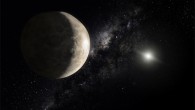
European astronomers have used ESO’s Very Large Telescope, the New Technology Telescope, and TRAPPIST: TRAnsiting Planets and PlanetesImals Small Telescope,...
European astronomers using ESA’s Planck Space Telescope have detected a 10 million light-years long bridge of hot gas connecting a pair of galaxy clusters,...
A study by Dr Stephen Curran of the University of Sydney and Dr Matthew Whiting of the CSIRO Astronomy and Space Science has addressed the mystery of why...
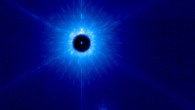
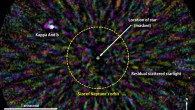
An international team of astronomers using infrared data from the Subaru Telescope in Hawaii has discovered a super-Jupiter around the star Kappa Andromedae.
This...