Featured News

Feb 13, 2026 by Sergio Prostak

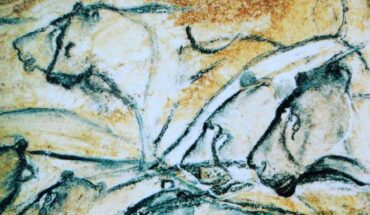
Between 73,000 and 20,000 years ago (Late Pleistocene), the Japanese Archipelago was inhabited by cave lions (Panthera spelaea), according to a new genetic and proteomic analysis of fossilized felid remains previously attributed to tigers (Panthera tigris). Cave lions painted in the Chauvet Cave, France. Lions and tigers were widespread apex predators during the Late Pleistocene and integral components of East Asian megafauna. Cave lions predominantly...

Feb 12, 2026 by News Staff

ESA’s CHaracterising ExOPlanet Satellite (CHEOPS) has revealed a four-planet system whose outermost world is a small and rocky planet — not a gas...

Feb 9, 2026 by Natali Anderson

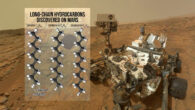
Known non-biological sources, from meteorites to surface chemistry, fall short of accounting for organic compounds detected by NASA’s Curiosity rover,...

Feb 5, 2026 by News Staff

New research led by Field Museum of Natural History paleontologists suggests that Archaeopteryx, the oldest known bird, had a feeding apparatus shaped...

Feb 5, 2026 by News Staff

The consistent performance of Kanzi the bonobo in pretend play experiments suggests that the mental capacity to imagine nonexistent objects may trace back...

Feb 4, 2026 by Natali Anderson

Using high-precision radio-occultation measurements from NASA’s Juno mission and incorporating the effects of zonal winds, planetary scientists derived...

Feb 3, 2026 by Sergio Prostak

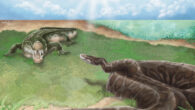
A fossil trunk vertebra from the Chiting Formation of Taiwan reveals that nearly 4-m-long pythons roamed the island during the Middle Pleistocene. An artistic...

Feb 2, 2026 by News Staff

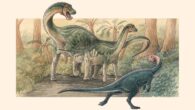
A new genus and species of diminutive bipedal dinosaur has been identified from the fossils found in Burgos province of Spain. Life reconstuction of Foskeia...

Jan 30, 2026 by Natali Anderson

Astronomers have discovered a new exoplanet orbiting the nearby K-dwarf star HD 137010 after detecting a single, shallow transit in the archival data from...

Jan 29, 2026 by News Staff

Ornithologists with the Cornell Lab of Ornithology have stitched together the most complete avian evolutionary tree ever, unveiling surprising relationships...

Jan 29, 2026 by News Staff

MoM-z14 existed just 280 million years after the Big Bang, according a team of astronomers led by Dr. Rohan Naidu from the Kavli Institute for Astrophysics...

Jan 29, 2026 by News Staff

New microwave measurements from NASA’s Juno spacecraft reveal Europa’s ice shell may stretch nearly 29 km (18 miles) deep, reshaping planetary scientists’...

Jan 27, 2026 by Natali Anderson

On January 22, 2026, the NASA/ESA Hubble Space Telescope observed the interstellar comet 3I/ATLAS nearly perfectly aligned with the Sun-Earth axis, revealing...

Jan 27, 2026 by Enrico de Lazaro

Archaeologists say they have discovered the ‘earliest known handheld wooden tools’ at the Middle Pleistocene site of Marathousa 1 in Greece. An artist’s...

Jan 27, 2026 by News Staff

Using ultra-sharp imaging from the NASA/ESA/CSA James Webb Space Telescope, astronomers have produced an extremely detailed, wide-area map of mass in the...

Jan 26, 2026 by Enrico de Lazaro

A new genus and species of titanosaur sauropod dinosaur that lived during the Cretaceous period has been identified from the fossilized remains found in...

Jan 22, 2026 by Enrico de Lazaro

For more than 165 years, one of the earliest giants to rise above Earth’s barren land has defied classification. Known as Prototaxites, the towering,...

Jan 21, 2026 by Enrico de Lazaro

The newly-discovered fossil — a 2.6-million-year-old partial lower jaw found in the Afar region of Ethiopia — represents the first known specimen...

Jan 20, 2026 by News Staff

The new infrared image from the NASA/ESA/CSA James Webb Space Telescope reveals the complex structure of gas and dust shed by a white dwarf in the center...

Jan 19, 2026 by News Staff

In a paper published today in the journal Current Biology, researchers at the University of Veterinary Medicine, Vienna, report the first experimental...