Anthropology News

Sep 22, 2016 by News Staff

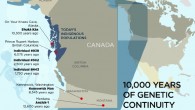
The first comprehensive genomic study of Indigenous Australians has revealed that they are indeed the direct descendants of Australia’s earliest settlers and diverged from their Papuan neighbors about 37,000 years ago. The study also confirmed that all modern non-African populations are descended from a single wave of migrants, who left Africa approximately 72,000 years ago. Depiction of the Jarijari (Nyeri Nyeri) people near Merbein engaged in...

Aug 30, 2016 by News Staff

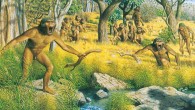
‘Lucy,’ perhaps the world’s most famous early human ancestor, probably died after falling from a tall tree, according to an international team of...

Aug 9, 2016 by News Staff

New research led by University of Victoria’s April Nowell reveals surprisingly sophisticated adaptations by early humans living 250,000 years ago in...

Jul 29, 2016 by News Staff

A team of paleontologists led by Dr. Patrick Randolph-Quinney from the University of the Witwatersrand (Wits University) in Johannesburg, South Africa,...

Jun 13, 2016 by News Staff

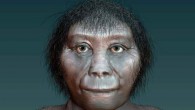
A new study contradicts the claim that LB1, the type specimen of Homo floresiensis, had Down syndrome, and further confirms its status as a valid and distinct...

Jun 9, 2016 by News Staff

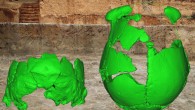
New hominin fossils from the Indonesian island of Flores shed light on the origin of the mysterious ‘hobbit’ species, Homo floresiensis. Hominin remains...

May 12, 2016 by News Staff

Neanderthals showed signs of nutritional stress during periods of extreme cold, according to a new study published in the July 2016 issue of the Journal...

May 11, 2016 by Enrico de Lazaro

An international team of genetic researchers from the United States and Europe has found new evidence that there was an Ice Age refugium in southern Arabia. Spatial...

May 3, 2016 by News Staff

Analyses of genome-wide data from 51 Eurasians from 7,000 – 45,000 years ago reveal two big changes in prehistoric human populations that are closely...

Apr 29, 2016 by Enrico de Lazaro

According to a team of scientists headed by Dr. Jean-Jacques Hublin at the Max Planck Institute for Evolutionary Anthropology in Leipzig, Germany, tooth-marks...

Apr 11, 2016 by News Staff

A new study published in the American Journal of Physical Anthropology suggests that the transfer of infectious pathogens between populations of Neanderthals...

Apr 8, 2016 by Natali Anderson

Neanderthal Y-chromosome genes disappeared from the genome of modern humans long ago, suggests a new study published this week in the American Journal...

Mar 30, 2016 by Enrico de Lazaro

According to a multinational team of scientists, Homo floresiensis — a primitive hominin species discovered in the Late Pleistocene sediments at...

Mar 29, 2016 by Enrico de Lazaro

Dr. David Reich from Harvard Medical School and his colleagues have produced a world map of Denisovan and Neanderthal ancestry in 120 diverse populations....

Mar 28, 2016 by News Staff

A team of scientists, led by Ohio State University cognitive researcher Prof. Aleix Martinez, has identified a universal facial expression that is interpreted...

Mar 24, 2016 by Sergio Prostak

Fieldwork at the Pliocene site of Kantis, Kenya, has yielded fossilized teeth and forearm bone attributable to Australopithecus afarensis, a hominid species...

Mar 18, 2016 by News Staff

Residents of the Pacific islands of Melanesia share fragments of genetic code with two early human species: Denisovans, whose remains were found in Siberia,...

Mar 15, 2016 by Enrico de Lazaro

The first analysis of nuclear DNA from Sima de los Huesos hominins, conducted by Dr. Matthias Meyer of the Max Planck Institute for Evolutionary Anthropology...

Mar 15, 2016 by Enrico de Lazaro

Neanderthals lived mainly on mammoth and rhino meat, as well as some plant food, says a team of researchers led by Prof. Hervé Bocherens from the University...

Mar 10, 2016 by News Staff

Life in what is now Tanzania was difficult and dangerous 1.8 million years ago, according to a team of scientists from the United States, Switzerland and...