Anthropology News

May 15, 2013 by Enrico de Lazaro

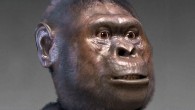
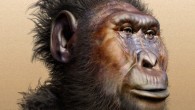
According to an international team of anthropologists led by Binghamton University, tiny ear bones from two species of early human ancestors in South Africa – Paranthropus robustus and Australopithecus africanus – could provide clues about our evolution and the development of modern-day humans. Reconstruction of Australopithecus africanus and Paranthropus robustus (John Gurche / Myartprints.com) The team has painstakingly studied a complete...

May 13, 2013 by Enrico de Lazaro

New research led by Prof Joseph Ferraro from Baylor University in Waco, Texas, has provided the oldest known evidence of hunting, scavenging and meat eating...

May 2, 2013 by Sergio Prostak

In two studies published in Physical Review Letters and PNAS, British mathematicians have attempted to explain how the structure of the brain relates to...

Apr 29, 2013 by Enrico de Lazaro

Japanese researchers from the University of Tokyo and the National Museum of Nature and Science in Ibaraki have precisely measured the brain size of Homo...

Apr 24, 2013 by News Staff

An international team of scientists has used ancient DNA recovered from human remains dating from up to 5,500 BC to reconstruct the first detailed genetic...

Apr 15, 2013 by Enrico de Lazaro

New research appearing in six papers in the journal Science describes how the hominid Australopithecus sediba walked, chewed, and moved around 2 million...

Mar 19, 2013 by Sergio Prostak

Fragments of an early human skull dating back 100,000 years exhibit a now-rare congenital deformation that indicates inbreeding might well have been common...

Feb 8, 2013 by Sergio Prostak

According to a research published in the open access journal PLoS ONE, a 400k year old fragment of human lower jaw recovered from a Serbian cave is the...

Jan 24, 2013 by Sergio Prostak

An international team of scientists has sequenced nuclear and mitochondrial DNA extracted from remains of a 40,000-year-old human found at the Tianyuan...

Dec 18, 2012 by Sergio Prostak

Emotion helps us recognize words more accurately and quicker, however, we do not remember emotionally intoned speech as accurately as neutral speech, according...

Dec 13, 2012 by Sergio Prostak

Dr Susan Hayes, a facial anthropologist and an honorary senior research fellow at the University of Wollongong in Australia, has reported results of the...

Dec 6, 2012 by Enrico de Lazaro

A new study by renowned Wits University archaeologist Prof Christopher Henshilwood provides first detailed summary of South African Middle Stone Age cultural...

Oct 24, 2012 by Enrico de Lazaro

A study led by Prof Kristen Hawkes at the University of Utah provides new mathematical support for the ‘grandmother hypothesis,’ a theory that humans...

Oct 15, 2012 by Enrico de Lazaro

According to a team of British scientists, the interaction between the region of the brain that processes sound – the auditory cortex – and...

Oct 10, 2012 by Enrico de Lazaro

According to a new study led by Dr Gillian Forrester of the University of Sussex, a predominance to be right-handed is not a uniquely human trait but one...

Oct 10, 2012 by Enrico de Lazaro

A team of Lund University scientists has discovered that the accelerated learning of foreign languages can lead to the growth of language-related regions...

Oct 4, 2012 by Enrico de Lazaro

According to a multinational team of scientists led by Dr Manuel Domínguez-Rodrigo of Complutense University, Madrid, a fragment of a child’s skull...

Aug 21, 2012 by News Staff

According to an international team of anthropologists, an ancient skull collected from a cave in the Annamite Mountains in northern Laos is the oldest...

Aug 15, 2012 by Enrico de Lazaro

Exciting new fossils discovered east of Lake Turkana in Kenya confirm that there were two additional species of our genus – Homo – living alongside...

Aug 14, 2012 by Sergio Prostak

Cambridge researchers have raised questions about the theory that Neanderthals and modern humans at some point interbred. Their findings show that common...