Physics News

Jun 3, 2019 by News Staff

Schrödinger’s cat, a thought experiment envisioned by the Austrian physicist Erwin Schrödinger in 1935, is a paradox that applies the concept of superposition in quantum physics to objects encountered in everyday life. The idea is that a cat is placed in a sealed box with a radioactive source and a poison that will be triggered if an atom of the radioactive substance decays. Quantum physics suggests that the cat is both alive and dead, until someone...

May 28, 2019 by News Staff

Researchers in the United Kingdom have extracted americium from a plutonium stockpile and used the heat generated from this radioactive element to generate...

May 24, 2019 by News Staff

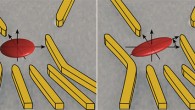
A team of physicists at the University of Basel has experimentally mapped out the shape and orientation of electrons trapped in quantum dots. An electron...

May 10, 2019 by News Staff

Gravitational waves are ‘ripples’ in space-time caused by some of the most violent and energetic processes in the Universe. Albert Einstein predicted...

May 8, 2019 by News Staff

On April 25 and 26, 2019, NSF’s Laser Interferometer Gravitational-Wave Observatory (LIGO) and the European-based Virgo detector registered two new gravitational...

May 6, 2019 by News Staff

According to new research published in the journal Physical Review Letters, charged particles traveling through empty space can emit Cherenkov radiation...

Apr 30, 2019 by News Staff

Professor Avi Loeb of the Harvard-Smithsonian Center for Astrophysics and colleagues have proposed a new test for inflation, the theory that our Universe...

Apr 26, 2019 by News Staff

The half-life of a process is the time after which half of the radioactive nuclei present in a sample have decayed away. Using the XENON1T dark-matter...

Apr 24, 2019 by News Staff

Predicted five decades ago, supersolidity is an exotic phase of matter where superfluidity and crystalline order coexist. By combining theory and experiments,...

Apr 23, 2019 by News Staff

Gravitational (Rayleigh-Taylor, or R-T) instabilities are produced by the interactions of two fluids of different densities that do not mix — oil...

Apr 15, 2019 by News Staff

Harvard University physicist Daniel Jafferis and colleagues have shown that wormholes — theoretical portals through space-time that could create...

Apr 10, 2019 by News Staff

Until now, atoms in physical matter were understood to exist typically in one of three states — solid, liquid or gas. An international team of physicists...

Apr 2, 2019 by News Staff

A team of nuclear physicists from the Washington University, St. Louis, Michigan State University, Western Michigan University and the University of Connecticut...

Mar 28, 2019 by News Staff

Physicists from CERN’s Large Hadron Collider beauty (LHCb) Collaboration announced this week the discovery of a new pentaquark particle, Pc(4312)+, decaying...

Mar 26, 2019 by News Staff

Stimulation with ultrafast light pulses can realize and manipulate states of matter with emergent structural, electronic and magnetic phenomena. According...

Mar 22, 2019 by News Staff

Physicists from the Large Hadron Collider beauty (LHCb) Collaboration at CERN have observed, for the first time, the matter-antimatter asymmetry known...

Mar 21, 2019 by News Staff

Tunneling, a key feature of quantum mechanics, is when a particle that encounters a seemingly insurmountable barrier passes through it, ending up on the...

Mar 11, 2019 by News Staff

Physicists from the Large Hadron Collider beauty (LHCb) Collaboration at CERN have discovered a previously unknown particle that consists of a charm quark...

Mar 8, 2019 by News Staff

Physicists from the AEgIS (Antihydrogen Experiment: Gravity, Interferometry, Spectroscopy) Collaboration at CERN have found a new way of making long-lived...

Mar 8, 2019 by News Staff

A team of physicists from the University of Rochester and the Lawrence Livermore National Laboratory has found a way to turn liquid metallic deuterium...