Space Exploration News
Jul 11, 2017 by Enrico de Lazaro

NASA’s Cassini robotic orbiter captured this incredible view of Epimetheus, an inner satellite of Saturn, during a flyby on February 21, 2017. The flyby had a close-approach distance of 9,300 miles (15,000 km). This image of Saturn’s moon Epimetheus was taken with Cassini’s narrow-angle camera on February 21, 2017, using a spectral filter which preferentially admits wavelengths of near-infrared light centered at 939 nm. Image credit: NASA /...

Jul 6, 2017 by News Staff

New research has found that most waves on Titan’s seas of liquid hydrocarbons are diminutive, reaching only about 1 cm (0.4 inches) high and 20 cm (8...

Jul 4, 2017 by James Romero

Mars experienced a single colossal impact during its first 130 million years, the equivalent to the largest body in the today’s asteroid belt slamming...

Jun 27, 2017 by News Staff

A new study published in the Journal of Geophysical Research: Space Physics suggests that the magnetosphere of the ice giant Uranus gets flipped on and...

Jun 22, 2017 by News Staff

Using the High Resolution Imaging Science Experiment (HiRISE) camera — the most powerful camera ever to orbit another planet, NASA’s Mars Reconnaissance...

Jun 21, 2017 by News Staff

A study of the potential future mission to ‘ice giant’ planets Uranus and Neptune and their moons has been released — the first in a series of...

Jun 17, 2017 by News Staff

Today, NASA’s Mars Atmosphere and Volatile Evolution (MAVEN) mission — sent to Mars to explore its upper atmosphere, ionosphere and interactions...

Jun 15, 2017 by News Staff

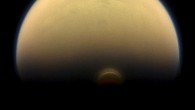
On June 9, 2017, NASA’s Cassini orbiter captured an image of methane clouds drifting in the summer skies of Saturn’s moon Titan. Titan’s summer skies....

Jun 15, 2017 by News Staff

An article entitled ‘Making Humans a Multi-Planetary Species’ presents the vision of Elon Musk, CEO of SpaceX, for future manned trips to Mars and...

Jun 13, 2017 by News Staff

A new image of Saturn’s yin-yang moon, Iapetus, was recently captured by NASA’s Cassini probe, currently in its ‘Grand Finale’ phase. This image...

Jun 12, 2017 by News Staff

The gas giant Jupiter is not only the most massive planet in our Solar System, but it’s also the oldest, according to an international team of planetary...

Jun 6, 2017 by James Romero

Strange fields of polygons seen during New Horizons’ visit to Pluto could be explained by million year variations in the dwarf planet’s orbit caused...

Jun 5, 2017 by News Staff

While combing through data gathered by NASA’s Cassini spacecraft during flybys of Enceladus, the sixth-largest of Saturn’s moons, researchers have...

Jun 2, 2017 by News Staff

Researchers analyzing data from NASA’s Lunar Reconnaissance Orbiter (LRO) have found evidence of surface frost near the Moon’s south pole. A view of...

May 31, 2017 by News Staff

Fracture-associated ‘halos’ of lighter-toned bedrock have been found on the lower north slope of Aeolis Mons (Mount Sharp) in Gale crater, Mars, indicating...

May 30, 2017 by News Staff

Saturn’s solstice — the longest day of summer in the northern hemisphere and the shortest day of winter in the southern hemisphere — arrived...

May 26, 2017 by News Staff

NASA’s Juno mission is rewriting what planetary researchers thought they knew about Jupiter, the largest and most massive planet in our Solar System:...

May 24, 2017 by News Staff

A new study published in the Astrophysical Journal Letters examines whether radioactive decay could support life on ocean worlds like Jupiter’s moon...

May 22, 2017 by News Staff

According to new research, some of Earth’s atmosphere was brought to the planet by comets billions of years ago. This artwork shows a rocky planet being...

May 20, 2017 by Natali Anderson

NASA’s Juno spacecraft successfully made its sixth close flyby of Jupiter on Friday, May 19, 2017, at 2 a.m. EDT (6 a.m. UTC; 11 p.m. PDT on May 18). Juno...