Space Exploration News
Dec 11, 2016 by News Staff

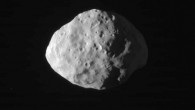
ESA’s ExoMars Trace Gas Orbiter (TGO) has sent back its first color image of Phobos, the larger and inner of the two natural satellites of Mars. Color composite of Phobos taken with TGO’s CaSSIS camera on November 26, 2016. The observation was made at a distance of 4,785 miles (7,700 km). To create the final color image, two images were taken through each of the four color filters of the camera — panchromatic, blue-green, red and infrared...

Dec 9, 2016 by News Staff

NASA’s Cassini orbiter has beamed back its first photos of the gas giant Saturn and the planet’s major moons since beginning the so-called ‘ring-grazing’...

Dec 7, 2016 by News Staff

New data from NASA’s Cassini spacecraft reveal that Saturn’s moons may be younger than previously thought. A giant of a moon appears before a giant...

Dec 7, 2016 by News Staff

Using data from NASA’s TIMED satellite, scientists have discovered the existence of hot atomic hydrogen atoms in the thermosphere (from about 56 to 311...

Dec 6, 2016 by News Staff

On Dec. 4, 2016 at 8:09 a.m. EST (5:09 a.m. PST), NASA’s Cassini spacecraft made its first close dive past the outer edges of Saturn’s rings. This...

Dec 6, 2016 by News Staff

Astronauts on long-duration flights experience visual impairments due to volume changes in cerebrospinal fluid, the clear fluid that helps cushion the...

Nov 25, 2016 by News Staff

In the final year of its epic voyage, on Nov. 30, NASA’s Cassini orbiter will begin a daring set of ‘ring-grazing orbits,’ skimming past the outside...

Nov 24, 2016 by News Staff

The crash of the ExoMars Schiaparelli test lander, also known as Entry, descent, and landing Demonstrator Module (EDM), last month was caused by a sensor...

Nov 23, 2016 by News Staff

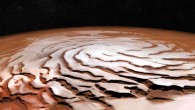
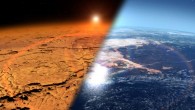
Frozen beneath Utopia Planitia, a large plain on Mars, lies about as much water as what’s in Lake Superior, according to an international team of planetary...

Nov 23, 2016 by News Staff

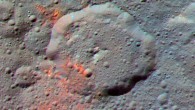
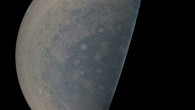
NASA’s Dawn spacecraft has captured another series of photos in its fifth orbit of the dwarf planet Ceres. This image of the limb of Ceres shows a section...

Nov 22, 2016 by James Romero

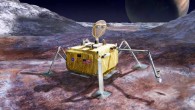
Measuring outer solar system ice-quakes could identify if Europa’s subsurface ocean is an oxygen-rich, leading candidates for life, or uncover the origin...

Nov 17, 2016 by News Staff

Using images from NASA’s MErcury Surface, Space ENvironment, GEochemistry and Ranging (MESSENGER) spacecraft, planetary researchers have discovered a...

Nov 17, 2016 by News Staff

A cold, slushy ocean lying deep beneath Pluto’s bright, heart-shaped Tombaugh Regio is the best explanation for features revealed by NASA’s New Horizons...

Nov 15, 2016 by News Staff

New near-infrared images of Saturn from NASA’s Cassini spacecraft show the northern polar region including the hexagon and polar vortex. The north polar...

Nov 14, 2016 by News Staff

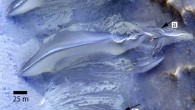
An unusual depression in the northern Hellas basin on Mars could be a new place to look for life on the planet, says a team of planetary researchers. The...

Nov 4, 2016 by News Staff

The latest image from the High Resolution Imaging Science Experiment (HiRISE) camera on NASA’s Mars Reconnaissance Orbiter shows parts of ESA’s ExoMars...

Nov 3, 2016 by News Staff

A small globular object found by NASA’s Curiosity rover at the Murray Formation of lower Mount Sharp on Mars has been identified as an iron-nickel meteorite. The...

Nov 2, 2016 by James Romero

Saturn’s rings are billions of years younger than we thought, say Cornell University researchers analyzing an almost forgotten set of data, collected...

Nov 1, 2016 by News Staff

Earth’s Moon is among the strangest planetary bodies in our Solar System. Its orbit lies unusually far away from our planet, with a surprisingly large...

Oct 28, 2016 by News Staff

An image from the High Resolution Imaging Science Experiment (HiRISE) camera on NASA’s Mars Reconnaissance Orbiter (MRO) reveals further details of the...