Space Exploration News
Apr 14, 2015 by News Staff

A new study published in the journal Nature Geoscience explains why the sand dunes of Titan run in parallel lines from the west to the east. The moons of our Solar System are brimming with unusual landscapes. However, sometimes they look a little more familiar, as in this new radar image from the Cassini orbiter. The image shows dark streaks carved into dunes reminiscent of those we might find on a beach on Earth, or raked with flowing lines in a...

Apr 13, 2015 by News Staff

NASA scientists using the framing camera aboard the Dawn spacecraft have created the first color map of the dwarf planet Ceres. This color map of Ceres...

Apr 13, 2015 by News Staff

An international team of scientists, led by Dr Javier Martin-Torres of the Spanish Research Council in Spain and the Lulea University of Technology in...

Apr 9, 2015 by News Staff

Scientists at the University of Maryland believe an Earth-Theia collision far more violent than previously thought could explain how the Earth’s Moon...

Apr 8, 2015 by News Staff

A team of planetary scientists led by Dr Nanna Bjørnholt Karlsson from the University of Copenhagen, Denmark, has calculated the total volume of water...

Apr 8, 2015 by News Staff

According to NASA chief scientist Dr Ellen Stofan, in the next twenty years, scientists may very well finally answer whether we are alone in the Solar...

Apr 2, 2015 by News Staff

This March 18, 2015, view from the Mast Camera (Mastcam) on NASA’s Curiosity rover shows a network of two-tone mineral veins at an area called Garden...

Mar 31, 2015 by News Staff

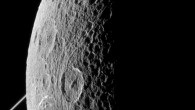
The NASA/ESA/ASI Cassini-Huygens spacecraft has captured the best images so far of Rhea, the fourteenth of Saturn’s known moons. This mosaic image from...

Mar 31, 2015 by News Staff

Carbon from cometary material that bombards Mercury, the first planet from the Sun, may be the reason the planet’s surface is heavily dark, says new...

Mar 23, 2015 by News Staff

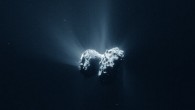
The Rosetta Orbiter Spectrometer for Ion and Neutral Analysis (ROSINA) instrument on ESA’s Rosetta spacecraft has made the first measurement of molecular...

Mar 18, 2015 by News Staff

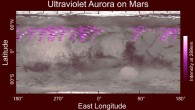
Scientists using the Imaging Ultraviolet Spectrograph (IUVS) instrument on NASA’s Mars Atmosphere and Volatile Evolution (MAVEN) spacecraft have observed...

Mar 18, 2015 by News Staff

Researchers using data from NASA’s MErcury Surface, Space ENvironment, GEochemistry, and Ranging (MESSENGER) mission have created global-scale maps of...

Mar 18, 2015 by News Staff

Planetary scientists using data from NASA’s Gravity Recovery and Interior Laboratory (GRAIL) mission have discovered a 124-mile-wide crater on the nearside...

Mar 17, 2015 by News Staff

NASA’s Cassini space probe has captured a close-up view of the beautiful and glamorous rings of Saturn, the sixth planet from the Sun. This close-up...

Mar 16, 2015 by News Staff

A new image from the High Resolution Stereo Camera on ESA’s Mars Express orbiter shows the portion of the Cydonia Mensae, a region that is home to a...

Mar 13, 2015 by News Staff

Scientists using NASA’s Hubble Space Telescope have uncovered new evidence for a massive subterranean ocean on Ganymede, the largest moon in the Solar...

Mar 12, 2015 by News Staff

NASA’s Solar Dynamics Observatory (SDO) captured an image of a mid-level solar flare on March 11, 2015, seen as a bright flash of light close to the...

Mar 12, 2015 by News Staff

NASA’s Cassini spacecraft has provided planetary researchers the first evidence that Enceladus – the sixth-largest of Saturn’s moons –...

Mar 6, 2015 by News Staff

After a seven-year cruise, and a one-year successful mission at the giant asteroid 4 Vesta, NASA’s Dawn space probe today successfully entered the orbit...

Mar 6, 2015 by News Staff

An ancient ocean on the Red Planet covered a greater portion of the surface than the Atlantic Ocean does on our planet and held more water than Arctic...