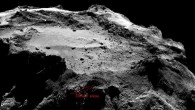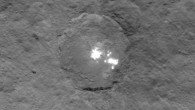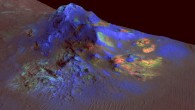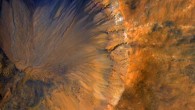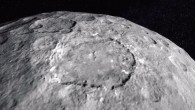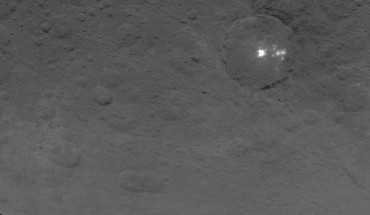
New pictures from NASA’s Dawn spacecraft show a cluster of mysterious bright spots and a pyramid-shaped peak on the surface of the dwarf planet Ceres. A cluster of bright spots can be seen in this image. The image was captured on June 9, 2015, when Dawn was nearly 2,700 miles (4,400 km) from the dwarf planet. Image credit: NASA / JPL-Caltech / UCLA / MPS / DLR / IDA. Ceres’ intriguing bright spots are located in a crater about 55 miles (90 km)...
Space Exploration News