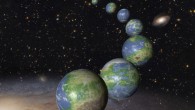
When the Solar System was born about 4.6 billion years ago only 8% of the potentially habitable terrestrial exoplanets that will ever form in the Universe...
A new study claims to have found evidence that life existed on our planet at least 4.1 billion years ago – about 300 million years earlier than prior...
WWF’s Living Blue Planet Report provides the most accurate picture of the state of the ocean, and the results are not very good. The report, released...
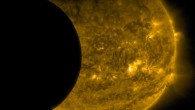
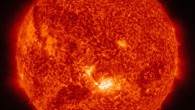
NASA’s SDO (Solar Dynamics Observatory) spacecraft captured this image of Earth and the Moon transiting the Sun together on September 13, 2015.
This...
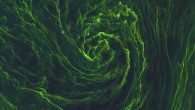
ESA’s Sentinel-2A satellite has captured detailed images of a phytoplankton bloom in the middle of the Baltic Sea on 7 August 2015. This particular bloom...
According to a new study published today in Nature, there are 3,041 billion trees on our planet, but over 15 billion trees are cut down each year, and...
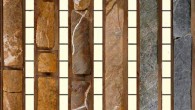
Traces of ancient microbial communities have been found in rock samples of Earth’s mantle from a seafloor hydrothermal system that was active more than...
The mineral diversity of Earth is unique and could not be duplicated anywhere in the cosmos. That’s according to a group of researchers, led by Dr Robert...
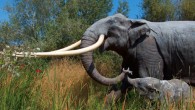
A new study published in the journal Diversity and Distributions reveals what the world map of mammals would look like if Homo sapiens had never existed.
The...
The world’s population, now 7.3 billion, is expected to reach the 11 billion mark by 2100, according to revised population projections released yesterday...
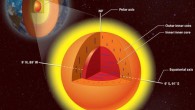
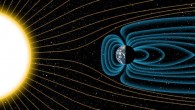
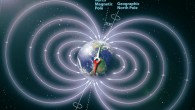
American and Canadian scientists have reported in the latest issue of Science that the magnetic field of our planet is at least 4 billion years old, up...
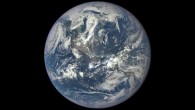
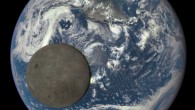
The Deep Space Climate Observatory (DSCOVR), a joint mission between NOAA, NASA, and U.S. Air Force, has captured its first image of Earth.
Earth as seen...
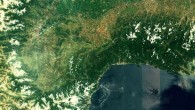
Just four days after being lofted into orbit, European Space Agency’s Sentinel-2A satellite delivered its first images of Earth.
Acquired on 27 June...