Paleoanthropologists have documented a bone tool assemblage from a single horizon dated to 1.5 million years ago at Olduvai Gorge in Tanzania. These bone...
New research led by Max Planck Institute of Geoanthropology scientists challenges conventional ideas about the habitability of ancient tropical forests...
This supernova event likely occurred in the Upper Centaurus Lupus association, a group of massive stars approximately 457 light-years away from Earth.
Illustration...
Paleontologists from the American University in Cairo and elsewhere say they have found an almost complete skull of the hyaenodont Bastetodon syrtos in...
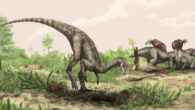
Dinosaurs dominated Mesozoic terrestrial ecosystems for approximately 160 million years, but their biogeographic origin remains poorly understood. The...
Australopithecus had a variable but plant-based diet, according to an analysis of stable isotope data from seven hominin specimens dating back 3.5 million...
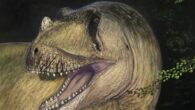
Paleontologists have described a new genus and species of carcharodontosaurid theropod dinosaur based on depictions of the now-destroyed specimen from...
Homo erectus, an early member of the genus Homo, successfully navigated harsher and more arid terrains for longer in Eastern Africa than previously thought,...
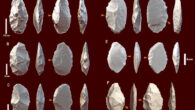
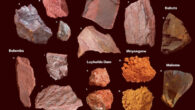
Paleoanthropologists have characterized the properties of raw stone materials that were selected and used by Early Pleistocene tool-makers at an Acheulian...
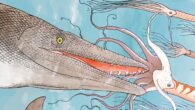
The newly-discovered species belongs to the mosasaurid genus Carinodens, and was a durophage, adapted for crunching hard-shelled invertebrates.
An artist’s...
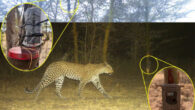
Conservation requires accurate information about species occupancy, populations and behavior. However, gathering these data for elusive, solitary species,...
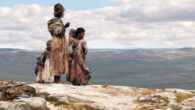
Scientists have sequenced and analyzed the genomes of seven individuals who lived between 42,000 and 49,000 years ago in Ranis, Germany and Zlatý kůň,...
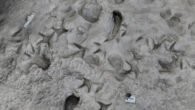
Paleoanthropologists have discovered 1.5-million-year-old footprints of two completely different species of hominins — Homo erectus and Paranthropus...
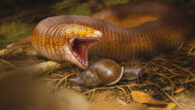
Paleontologists have described a new genus and species of trogonophid amphisbaenian (worm lizard) from fossilized specimens found in Tunisia.
Life reconstruction...
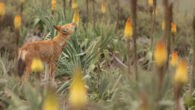
Nectar foraging by Ethiopian wolves (Canis simensis) may contribute to the pollination of the Ethiopian red hot poker flower (Kniphofia foliosa), according...
Archaeologists say they have discovered the oldest known evidence for intensive ochre mining worldwide, at least 48,000 years ago, in Lion Cavern at Ngwenya...
Researchers from the University of Tokyo and elsewhere have found pockets of living microbes in mineral-filled veins within 2-billion-year-old rock from...
The Horned Serpent panel at La Belle France in the Free State province of South Africa was painted by the San people at least two hundred years ago. It...
A team of paleontologists led by Southern Methodist University has discovered more than 260 footprints of Early Cretaceous dinosaurs in Brazil and in Cameroon,...
A new species of three-bearded rockling has been described from one specimen collected using a grab sample from the Tanoûdêrt Canyon off Mauritania at...