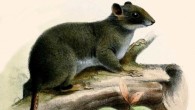
For the first time, scientists have sequenced and analyzed the nuclear and mitochondrial DNA of the Cameroon scaly-tail (Zenkerella insignis), one of Africa’s...
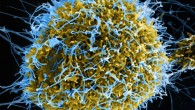
In a new study published in the journal eLife, scientists apply big-data analysis to reveal the full extent of viruses’ impact on the evolution of humans...
A new study led by Vanderbilt University scientist Dr. Suzana Herculano-Houzel has found that birds have significantly more neurons packed into their brains...
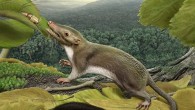
Therian mammals, the ancestors of most modern mammals, began their massive diversification 10-20 million years before the extinction of dinosaurs, according...
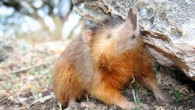
An international team of scientists has completely sequenced the mitochondrial genome of the Hispaniolan solenodon (a venomous, insectivorous mammal that...
A new study led by Dr. Gilles Laurent from the Max Planck Institute for Brain Research in Frankfurt, Germany, reveals slow-wave (SW) and rapid eye movement...
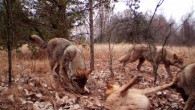
New research published in the journal Frontiers in Ecology and the Environment documents animal species prevalent in the human-free Chernobyl Exclusion...
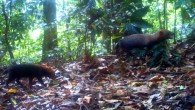
Motion-sensitive cameras placed at several sites in Panama have captured images of the bush dog (Speothos venaticus), one of the most enigmatic of the...
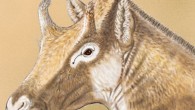
Fossil remains of a previously unknown species of palaeomerycid ruminant that lived about 16 million years ago have been found in Spain, paleontologists...
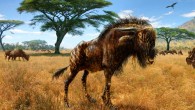
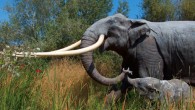
For several decades, scientists have wondered how Pleistocene ecosystems (2.5 million to 11,700 years ago) survived despite the presence of huge herbivores,...
An international team of paleontologists has discovered a 125-million-year-old ancient mammal fossil, which has been named a new species, in Spain. According...
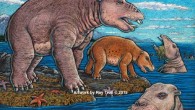
A new genus and species of desmostylian mammal that lived about 23 million years ago (early Miocene) has been identified from fossils found on Unalaska,...
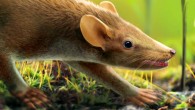
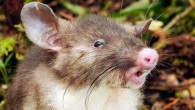
Dr Jake Esselstyn of Louisiana State University and his colleagues from Indonesia and Australia have discovered a new genus and species of shrew rat in...
In 1986, after a catastrophic nuclear accident at the Chernobyl Nuclear Power Plant in the Soviet Union released radioactive particles into the environment,...
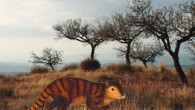
An international team of paleontologists has found a specimen of a previously unknown species of mammal from the early Paleocene, about 65 million years...
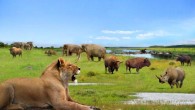
A new study published in the journal Diversity and Distributions reveals what the world map of mammals would look like if Homo sapiens had never existed.
The...
A new study published in the journal Nature Communications has shown that, despite not having a nervous system, plants send signals normally associated...
Dinosaurs were endothermic (warm-blooded) like mammals, says paleontologist Dr Michael D’Emic of Stony Brook University.
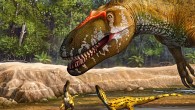
Torvosaurus gurneyi. Image credit:...