A research team led by Harvard University scientist Julie McGeoch has found a never-before-seen protein inside a meteorite called Acfer 086.
A sample of...
Scientists from Washington University, St. Louis, Caltech and the University of Chicago have found presolar grains — tiny bits of solid interstellar...
A team of researchers from the University of Washington and NASA’s Ames Research Center has analyzed iron-rich micrometeorites collected from 2.7 billion-year-old...
The 70 km- (43.5-mile) diameter Yarrabubba impact structure in Western Australia is approximately 2.23 billion years old, according to new research led...
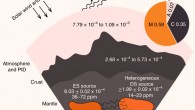
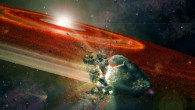
A new study, published in the journal Nature Astronomy, suggests that our young Solar System’s protoplanetary disk was divided into two regions: on the...
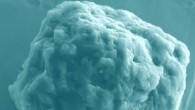
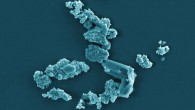
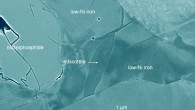
A team of researchers from the United States, Switzerland and Australia has found 4.6 to 7-billion-year-old presolar grains of silicon carbide (SiC) in...
A species of archaea called Metallosphaera sedula is capable of growth on stony meteorites, utilizing metals trapped within these extraterrestrial objects...
An international team of scientists from the UK and Japan has found ‘fossilized asteroidal ice’ and pristine dust materials in a 4.6-billion-year-old...
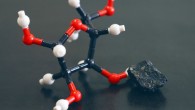
An international team of scientists from Japan and the United States has found ribose and other bioessential sugars in two primitive meteorites, NWA 801...
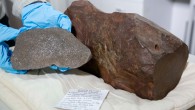
A 17-kg chondrite meteorite that landed on Earth less than 1,000 years ago has been discovered by chance in the Australian state of Victoria.
The Maryborough...
Fossil clams found in southwestern Florida contain ancient microtektites, tiny (about 200 μm in diameter) glass beads that form when the explosive impact...
A research team led by scientists from Boise State University and NASA’s Goddard Space Flight Center has identified several complex cyanide compounds...
Planetary scientists have long observed water-ice clouds in the Martian middle atmosphere (18.6-37.2 miles, or 30-60 km, above the surface). Now, a University...
An international team of scientists has found a wealth of well-preserved stony meteorites in the Atacama Desert that allowed them to reconstruct the rate...
Libyan desert glass is a natural glass found in western Egypt that formed 29 million years ago, however its origin is disputed: the two main formation...
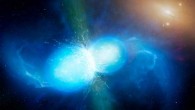
According to new research, a nearby binary neutron-star merger gave birth to 0.3% of the Earth’s heaviest elements, including gold, platinum and uranium;...
Using data from NASA’s Lunar Atmosphere and Dust Environment Explorer (LADEE), a team of researchers has discovered that water is being released from...
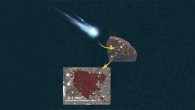
A cometary building block has been discovered inside the LaPaz Icefield (LAP) 02342, a carbonaceous chondrite meteorite found in Antarctica in the 2000s.
An...