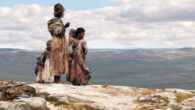
Archaeologists have discovered two Neanderthals tracksites in the southwestern most region of Europe: at Monte Clérigo, dated to 78,000 years ago, trackways...
Paleoanthropologists from Tel Aviv University, the Université de Liège and France’s Muséum National d’Histoire Naturelle say they have found a combination...
The Neanderthal variant in AMPD1 decreases its enzymatic activity by 25% in lab-produced proteins and by up to 80% in the muscles of genetically engineered...
Interbreeding between anatomically modern Homo sapiens and Neanderthals thousands of years ago may be responsible for Chiari Malformation Type 1, a serious...
Amud and Kebara caves in northern Israel are two broadly contemporaneous Middle Paleolithic sites dated to 70,000-50,000 years ago, both located in the...
Genetic and archaeological evidence imply a second major movement of Neanderthals from Western to Central and Eastern Eurasia sometime in the Late Pleistocene....
While the Middle Paleolithic period is viewed as a dynamic time in European and African history, it is commonly considered a static period in East Asia....
This bottleneck event happened between 130,000 and 50,000 years ago, according to new research led by scientists from the Universitat Autònoma de Barcelona...
One of these genetic variants was inherited from Neanderthals, according to a study led by University College London researchers.
El Sidron Neanderthals...
In a genomic study encompassing more than 300 genomes, researchers determined the time period during which Neanderthals interbred with modern humans, starting...
Scientists have sequenced and analyzed the genomes of seven individuals who lived between 42,000 and 49,000 years ago in Ranis, Germany and Zlatý kůň,...
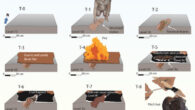
Archaeologists say they have discovered a new type of Neanderthal hearth at Vanguard Cave, Gibraltar. This hearth structure coincides with predictions...
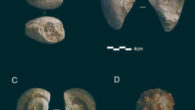
The Neanderthal groups that inhabited a cave in what is now Spain approximately 46,000 years ago gathered and collected fossils, according to a paper published...
New research by scientists from the University of Reading and the University of Durham shows that encephalization (i.e., relative brain size increase)...
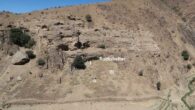
The Soii Havzak rockshelter in the Zeravshan Valley in Tajikistan contains several phases of Paleolithic occupation rich in stone tools, faunal and charcoal...
In 2015, archaeologists discovered the fossilized remains of a Neanderthal individual at Grotte Mandrin, a rockshelter located in Mediterranean France...
An archaeological sequence of the Abric Pizarro site in the southeast Pre-Pyrenees is centered on MIS 4 (around 71,000 years ago), a poorly known period...
New research shows that recurrent episodes of gene flow, beginning 250,000 to 200,000 years ago, affected the genomes and biology of both modern humans...
Neanderthals’ lives were historically portrayed as highly stressful, shaped by constant pressures to survive in harsh ecological conditions, thus potentially...
Because it is often assumed that fundamental behavioral differences distinguish Neanderthals and Homo sapiens, the ability to structure space within the...