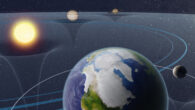
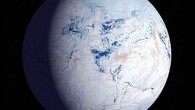
Glacial cycles during the Early Pleistocene epoch are characterized by a dominant 41,000-year periodicity and amplitudes smaller than those of glacial...
Early humans and their hominin relatives had to adapt to new environments to spread out of Africa. In a new study, paleoanthropologists from the Institute...
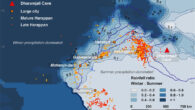
In new research, scientists from the University of Cambridge and elsewhere reconstructed changes in summer and winter rainfall from trace elements and...
Paleontologists have described two new species of the early primatomorphan genus Ignacius from Ellesmere Island, Nunavut, Canada.
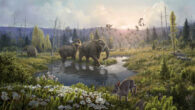
Life reconstruction of...
Researchers have analyzed microscopic fragments of 2-million-year-old environmental DNA from of the Kap København Formation in Greenland. The DNA record...
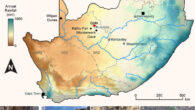
Detailed, well-dated palaeoclimate and archaeological records are critical for understanding the impact of environmental change on human evolution. In...
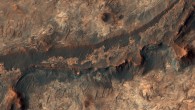
Early Mars had rivers, but the cause of the transition from a wet planet to dry remains unknown. Past Martian climate can be probed using the distribution...
To test their hypothesis that the eastern moa (Emeus crassus), an extinct flightless bird from New Zealand, survived the Last Glacial Maximum (LGM) in...
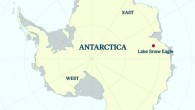
Named Lake Snow Eagle, the newly-discovered subglacial lake is approximately 42 km in length and 370 km2 in area, making it one of the largest subglacial...
Declining temperature has been thought to explain the abandonment of Norse settlements in southern Greenland in the early 15th century CE, although limited...
Researchers from the University of Adelaide and elsewhere have sequenced and analyzed mitochondrial DNA from fossils of cave lions (Panthera spp.) and...
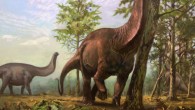
Dinosaurs dominated Mesozoic terrestrial ecosystems globally. However, whereas a pole-to-pole geographic distribution characterized ornithischian and theropod...
One or more volcanic eruptions preceded the majority (62 of 68) of dynastic collapses in China over the past 2,000 years, according to new research led...
The end-Ordovician mass extinction, the first of the ‘Big Five’ mass extinctions occurred 445 million years ago and was characterized by the disappearance...
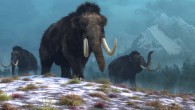
In a large-scale environmental DNA metagenomic study of ancient plant and mammal communities, an international team of researchers have analyzed 535 permafrost...
Nearly 63% of Afro-Arabian mammalian species went extinct approximately 30 million years ago (Oligocene epoch), after Earth’s climate shifted from swampy...
New research shows that mean annual temperatures in southeast Australia gradually declined from 27 degrees Celsius during the Middle Eocene epoch to...
Easter Island (Rapa Nui in the native language), a small volcanic island in southeastern Polynesia, has long been the focus of debate regarding the impact...