The 153,000-year-old footprint, which was found in the Garden Route National Park, a national park in the Garden Route region of the South African Western...
The dispersal of anatomically modern Homo sapiens out of Africa and across Eurasia provides a unique opportunity to examine the impacts of genetic selection...
In new research, scientists examined chemical properties locked inside tooth enamel of two Middle Paleolithic Neanderthals and a Magdalenian human from...
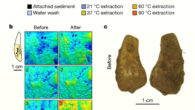
Application of a novel non-destructive DNA extraction method to a Paleolithic deer tooth pendant from Denisova Cave, Siberia, resulted in the recovery...
Modern humans have populated Europe for more than 45,000 years. However, our knowledge of the genetic relatedness and structure of ancient hunter-gatherers...
Archaeologists have unearthed a rich assemblage of human-accumulated terrestrial and marine faunal remains, including those of several crab species, in...
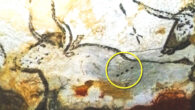
In at least 400 European caves such as Lascaux, Chauvet and Altamira, Upper Paleolithic humans drew, painted and engraved non-figurative signs from at...
Researchers from the University of Tübingen and elsewhere have unearthed the cutmarked bones of cave bears at the Middle Pleistocene site of Schöningen...
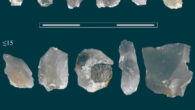
Scientists at the University of Tübingen have performed a careful and in-depth analysis of tiny resharpening flakes from the famous Middle Pleistocene...
Paleoanthropologists have explored the social organization of Neanderthals using ancient nuclear, Y-chromosomal and mitochondrial DNA data from the remains...
A new modeling study by Leiden University and University of Cambridge scientists predicts the appearance of Homo sapiens and the Protoaurignacian culture...
Dubbed the Taurasian tur, the newly-identified lineage is best represented by a 14,000-year-old genome sequenced from a specimen found in Direkli Cave,...
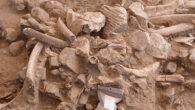
Archaeologists have found butchered bones from a mother mammoth and her calf and signs of controlled fire at the Hartley locality, an open-air site on...
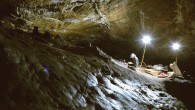
Cueva de Ardales is a hugely important Paleolithic site in Malaga, Spain, owing to its rich inventory of rock art. According to new research, Neanderthals...
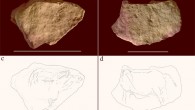
Archaeologists have examined the engraved limestone plaquettes excavated from Montastruc, a rockshelter site in southern France. These plaquettes are likely...
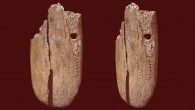
The 41,500-year-old oval-shaped pendant from Stajnia Cave in Poland is the oldest decorated jewelry found in Eurasia.
Dorsal views of the 41,500-year-old...
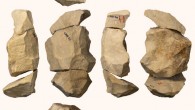
Archaeologists have examined a large assemblage of 45,000-year-old stone tools and by-products of tool-making process from the site of Heidenschmiede in...
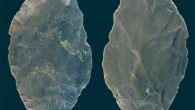
Archaeologists say they have found a 65,000-year-old leaf point in a cave in the Swabian Jura, Germany.
The 65,000-year-old leaf point from Hohle Fels...
An international team of scientists has retrieved and analyzed nuclear and mitochondrial environmental DNA of humans, wolfs (Canis lupus), and bisons (Bison...
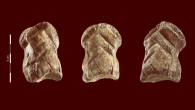
Archaeologists have uncovered a 51,000-year-old engraved giant deer phalanx in a cave in the Harz Mountains, Germany. The find, which came from an apparent...