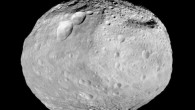
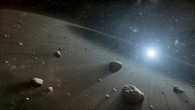
A new study by Curtin University researchers has shed light on the early days of Vesta, the second largest asteroid of the main belt and the fourth such...
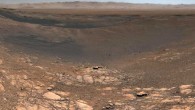
NASA’s Mars rover Curiosity has captured its highest-resolution panorama (high-resolution file, 2.43 GB) yet of the Martian surface.
The new panorama...
NASA’s Curiosity rover recently discovered various classes of organic matter in the Martian sediments. One intriguing group of detected organic compounds...
The Minor Planet Centre has just announced that our planet has been orbited by a second moon for the past three years or so. Designated 2020 CD3, the object...
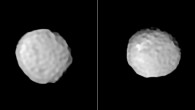
Astronomers using the Spectro-Polarimetric High-contrast Exoplanet Research (SPHERE) imager, an instrument installed on ESO’s Very Large Telescope (VLT)...
Breakthrough Listen, the largest ever scientific research program aimed at finding evidence of intelligent life beyond Earth, has released data from its...
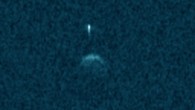
Astronomers using a radio telescope at the Arecibo Observatory have captured the first images of the recently-discovered near-Earth asteroid 2020 BX12....
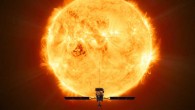
Solar Orbiter, a new collaborative mission between ESA and NASA to study our Sun, successfully launched on an Atlas V 411 rocket from Cape Canaveral Air...
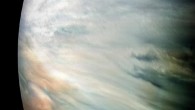
Water makes up about 0.25% (almost three times that of the Sun) of the molecules in Jupiter’s atmospheric molecules at the gas giant’s equator, according...
Using data from the Atacama Large Millimeter/submillimeter Array (ALMA), a team of Japanese researchers has found that Galactic cosmic rays affect the...
On February 14, 1990, cameras of NASA’s Voyager 1 spacecraft pointed back toward the Sun and snapped a series of pictures of the Sun, Earth and other...
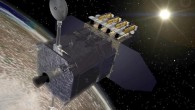
In February 2020, NASA’s Solar Dynamics Observatory (SDO) is celebrating its 10th year in space.
NASA’s Solar Dynamics Observatory (SDO) spacecraft,...
According to new research by University of Warwick and University of Colorado, Boulder scientists, electromagnetic radiation from stars at the end of their...
Solar Orbiter, a new collaborative mission between the European Space Agency (ESA) and NASA to study our Sun, launched at 05:03 CET on February 10, 2020...
Pluto’s famous heart-shaped structure, named Tombaugh Regio, controls winds in the atmosphere of the dwarf planet and may give rise to features on its...
New observations from NASA’s Parker Solar Probe show how Sun’s plasma that is released after a solar flare can accelerate and pile up solar energetic...
The high-resolution images from the National Science Foundation’s Daniel K. Inouye Solar Telescope, on the summit of Haleakala, Hawai’i, show a close-up...