Biology News

Nov 19, 2014 by News Staff

About 80 million bacteria are transferred during a single 10-second kiss, says a group of researchers from the Netherlands. Partners who kiss each other at least nine times a day share similar communities of oral bacteria, the team says. Image credit: Skyggefotografen / CC BY 2.0. Dr Remco Kort of the TNO Microbiology and Systems Biology in Zeist and his colleagues from Micropia Museum and the VU University Amsterdam investigated the effects of intimate...

Nov 17, 2014 by News Staff

An international team of scientists from Germany and France has described a new species of gecko that lives in a karstic limestone massif called Montagne...

Nov 13, 2014 by Enrico de Lazaro

According to a new study published in the journal Plant and Cell Physiology, hemoglobin found in a variety of beetroot called the sugar beet (Beta vulgaris...

Nov 8, 2014 by News Staff

Using a molecular dataset consisting of 144 carefully chosen species of insects, researchers from the 1KITE (1,000 Insect Transcriptome Evolution) project...

Nov 7, 2014 by News Staff

Mexican free-tailed bats (Tadarida brasiliensis) compete for prey by jamming each other’s sonar, says a new study carried out by Wake Forest University...

Nov 6, 2014 by News Staff

Marine researchers from the U.S. National Oceanic and Atmospheric Administration (NOAA) have discovered a new species of deep-sea soft coral that lives...

Nov 5, 2014 by News Staff

Male hummingbirds use their beaks as deft, dagger-like weapons when fighting each other for territory, according to a study carried out by a group of scientists...

Nov 3, 2014 by News Staff

An international group of scientists headed by Dr Laura Miglio from the Museu Paraense Emílio Goeldi in Brazil has described a new tarantula species from...

Nov 3, 2014 by News Staff

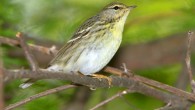
Europe has 421 million fewer birds than just three decades ago, according to a new study led by Dr Richard Inger from the University of Exeter’s Environment...

Nov 2, 2014 by News Staff

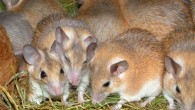
The Kashmir musk deer (Moschus cupreus) – a small animal with vampire-like fangs – still lives in the eastern forests of Afghanistan more than...

Oct 30, 2014 by News Staff

Australian scientists have described three new lizard species, hidden from humans for millions of years in remote areas of the country. Three new species...

Oct 30, 2014 by News Staff

A population of Hood Island giant tortoises, which once dwindled to just over a dozen, has recovered on the Galapagos island of Española, says a team...

Oct 29, 2014 by News Staff

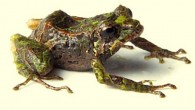
A team of U.S. scientists headed by Dr Jeremy Feinberg of Rutgers University in New Brunswick, NJ, has described a new cryptic species of leopard frog...

Oct 28, 2014 by News Staff

Specialists from the U.S. Fish and Wildlife Service have proposed to list the African lion (Panthera leo leo) – a symbol of majesty, courage and strength...

Oct 21, 2014 by News Staff

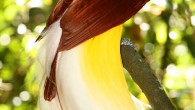
Yale University ornithologists Prof Richard Prum and Jacob Berv have mapped out the first large-scale evolutionary family tree for the Neotropical cotingas...

Oct 18, 2014 by News Staff

A new study published in the journal Biology Letters is the first to document that fish larvae produce sound. This image shows an unpigmented larva of...

Oct 14, 2014 by News Staff

Crocodiles and their relatives such as alligators and caimans often work in teams to hunt their prey, according to a study carried out by Dr Vladimir Dinets...

Oct 13, 2014 by News Staff

A team of scientists led by Dr Wen-Lung Wu of the Academia Sinica’s Biodiversity Research Center in Taipei has described a new species of land snail...

Oct 7, 2014 by News Staff

The Mirror turtle ant (Cephalotes specularis) – an insect recently discovered in Brazil by entomologist Dr Scott Powell of the Columbian College of Arts...

Oct 3, 2014 by News Staff

A new study, led by Dr David Jacoby of the Institute of Zoology in London, UK, has shown for the first time that the fearsome predators of the deep blue...