New paleoclimate evidence shows that around 1.1 million years ago, the southern European climate cooled significantly and caused an extinction of archaic...
In new research, scientists from the University of Cambridge and elsewhere reconstructed changes in summer and winter rainfall from trace elements and...
With ongoing carbon dioxide emissions from the burning of fossil fuels, the atmosphere of Earth heats up, which has dramatic consequences for the ice sheets....
Researchers have analyzed microscopic fragments of 2-million-year-old environmental DNA from of the Kap København Formation in Greenland. The DNA record...
Mass extinctions are well recognized as significant steps in the evolutionary trajectory of life on Earth. In new research, geobiologists from Virginia...
Paleontologists in Bulgaria have described a new species of the panda genus Agriarctos, from two fossilized teeth dating to 5.5 million years ago.
Life...
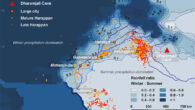
Mayapan emerged as a regional Maya capital on the Yucatán Peninsula, following the demise of Chichen Itza between 1000 and 1100 CE.
Drought may have...
The 3,400-year-old settlement with a palace and several large buildings could be the ancient city of Zakhiku, believed to have been an important center...
Early Mars had rivers, but the cause of the transition from a wet planet to dry remains unknown. Past Martian climate can be probed using the distribution...
In a study published in the journal Frontiers in Ecology and Evolution, a team of scientists in South Africa assessed the effects of air temperature and...
To test their hypothesis that the eastern moa (Emeus crassus), an extinct flightless bird from New Zealand, survived the Last Glacial Maximum (LGM) in...
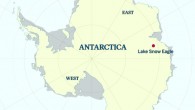
Named Lake Snow Eagle, the newly-discovered subglacial lake is approximately 42 km in length and 370 km2 in area, making it one of the largest subglacial...
Declining temperature has been thought to explain the abandonment of Norse settlements in southern Greenland in the early 15th century CE, although limited...
Researchers from the University of Adelaide and elsewhere have sequenced and analyzed mitochondrial DNA from fossils of cave lions (Panthera spp.) and...
One or more volcanic eruptions preceded the majority (62 of 68) of dynastic collapses in China over the past 2,000 years, according to new research led...
In a large-scale environmental DNA metagenomic study of ancient plant and mammal communities, an international team of researchers have analyzed 535 permafrost...
Nearly 63% of Afro-Arabian mammalian species went extinct approximately 30 million years ago (Oligocene epoch), after Earth’s climate shifted from swampy...
The Carnian stage (lasted from 237 to 227 million years ago) of the Triassic period marks one of the most significant intervals of the past 250 million...
A research team led by Florida Museum of Natural History scientists has compiled 140,499 body size records of over 100 North American mammals to test how...
New research shows that mean annual temperatures in southeast Australia gradually declined from 27 degrees Celsius during the Middle Eocene epoch to...