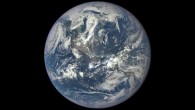
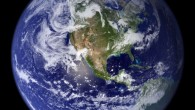
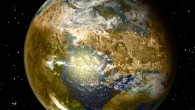
The Deep Space Climate Observatory (DSCOVR), a joint mission between NOAA, NASA, and U.S. Air Force, has captured its first image of Earth.
Earth as seen...
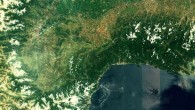
Just four days after being lofted into orbit, European Space Agency’s Sentinel-2A satellite delivered its first images of Earth.
Acquired on 27 June...
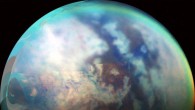
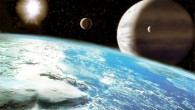
A team of researchers led by Dr Andrew Coates of University College London, UK, has found that the interactions between the atmosphere of Saturn’s moon...
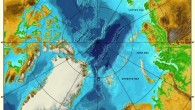
The surface waters of the Arctic Ocean could reach levels of acidity that threaten the ability of animals to build and maintain their shells by 2030, according...
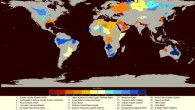
Two new studies using data from NASA’s GRACE satellites have found that 21 of planet’s 37 largest aquifers are being rapidly depleted by human consumption,...
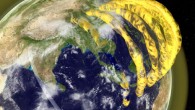
Scientists using the Murchison Widefield Array in the Western Australian desert have confirmed the existence of tubular plasma structures between the plasmasphere...
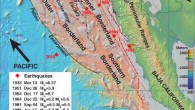
According to a group of scientists headed by Dr Mark Legg of Legg Geophysical in Huntington Beach, residents of coastal Southern California could be surprised...
According to a new study published in the journal Nature Communications, the underlying physical process that creates ‘breaking wave’ cloud patterns...
According to a team of researchers led by Prof Allison Steiner of the University of Michigan, tiny pollen particles may make it rain.
Small pollen particles...
According to a new study in the journal Nature Geoscience, fjords absorb approximately 18 million tones of organic carbon each year, equivalent to 11 percent...
NASA’s Nexus for Exoplanet System Science (NExSS) initiative will bring together top research groups and will provide a synthesized approach in the search...
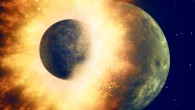
Scientists at the University of Maryland believe an Earth-Theia collision far more violent than previously thought could explain how the Earth’s Moon...
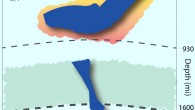
New research led by Dr Hauke Marquardt of the University of Bayreuth, Germany, suggests the existence of a previously unknown superviscous layer inside...
A new study, published March 23 in the Proceedings of the National Academy of Sciences, suggests that Jupiter’s inward-outward migration early in the...
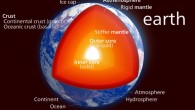
Violent collisions between the infant Earth and other objects in our Solar System generated significant amounts of iron vapor, says a group of researchers...
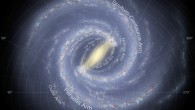
The Solar System’s movement through a dark-matter halo enveloping our Milky Way Galaxy may perturb the orbits of comets and lead to additional heating...
The ability to use atmospheric nitrogen to support more widespread life was thought to have appeared 2 billion years ago. Now, a study led by Dr Eva Stüeken...