Launched in September 1977, NASA’s Voyager 1 spacecraft flew by Jupiter in 1979 and then Saturn in late 1980. In August 2012, it crossed the heliopause...
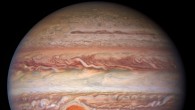
Three images of Jupiter from the 8-m Frederick C. Gillett Gemini North telescope at the Gemini Observatory and the NASA/ESA Hubble Space Telescope show...
On May 10, 2021, NASA’s OSIRIS-REx spacecraft fired its main engines full throttle for seven minutes; this burn thrust the spacecraft away from the asteroid...
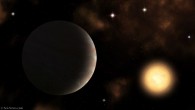
Astronomers using NASA’s Transiting Exoplanet Survey Satellite have discovered a sub-Neptune exoplanet orbiting TOI-220, a bright and old K-type dwarf...
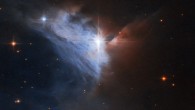
The NASA/ESA Hubble Space Telescope has produced an outstanding image of an emission nebula called NGC 2313.
This Hubble image shows the emission nebula...
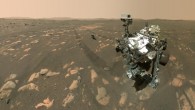
NASA’s Perseverance rover used a microphone on its SuperCam laser instrument to listen as the Ingenuity helicopter flew for the fourth time on April...
Detailed measurements from the Grand Finale phase of NASA’s Cassini mission revealed distinctive features of Saturn’s magnetic field. These features...
On July 11, 2020, NASA’s Parker Solar Probe made its third flyby of Venus. During 7 min around the closest approach, one of the spacecraft’s scientific...
Astronomers using NASA’s Transiting Exoplanet Survey Satellite (TESS) exoplanet-hunting mission have detected the rising and decaying optical afterglow...
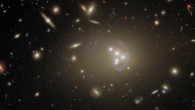
Abell 3827, a galaxy cluster located approximately 1.3 billion light-years away in the southern constellation of Indus, is so massive that its gravity...
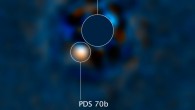
Astronomers using the NASA/ESA Hubble Space Telescope have imaged a Jupiter-sized, still-forming planet around the orange dwarf star PDS 70. This is the...
Astronomers using NASA’s Chandra X-ray Observatory have detected stable titanium, along with chromium and iron, blasting out from the center of the supernova...
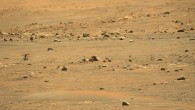
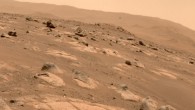
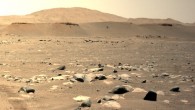
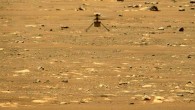
NASA’s Ingenuity helicopter took off at 4:31 a.m. EDT (1:31 a.m. PDT), or 12:33 p.m. local Mars time, on April 25, 2021, rising 5 m (16 feet); then it...
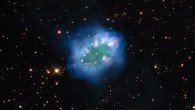
The NASA/ESA Hubble Space Telescope has captured a striking new photo of a planetary nebula called the Necklace Nebula.
This Hubble image shows the Necklace...
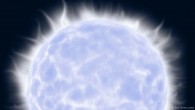
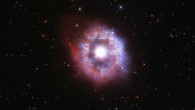
The NASA/ESA Hubble Space Telescope turned 31 this year, and for the occasion, the Hubble team has just released a beautiful image of the luminous blue...
On April 20, 2021, the Mars Oxygen In-Situ Resource Utilization Experiment (MOXIE) instrument aboard NASA’s Perseverance rover converted some of carbon...
Lasting 51.9 seconds, Ingenuity’s experimental flight on April 22, 2021, added several new challenges to its first flight, including a higher maximum...
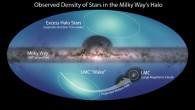
Astronomers using data ESA’s Gaia mission and NASA’s Near Earth Object Wide Field Infrared Survey Explorer (NEOWISE) have created a map of the outermost...