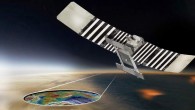
In 2020, planetary scientists detected small amounts of the biosignature gas phosphine (PH3) in the atmosphere of Venus using the James Clerk Maxwell Telescope...
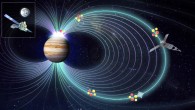
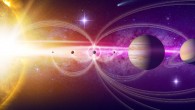
The rapidly rotating, strong magnetic field of Jupiter provides a natural lab that is key to understanding the dynamics of high-energy plasmas. Spectacular...
Using the Near-Infrared Spectrograph (NIRSPEC) instrument at the Keck II telescope, astronomers conducted near-infrared spectroscopic observations of the...
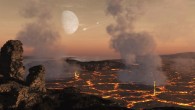
Once the Earth was fully formed about 4.5 billion years ago, its subsequent evolution was governed by complex geophysical processes. The planet, however,...
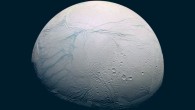
Saturn’s 500-km- (300-mile) diameter moon Enceladus is covered in ice which contains many long fractures or rifts, including fractures called tiger stripes....
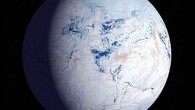
Earth’s sphere tilts on its axis at an angle of 23.5 degrees; this gives us our seasons, with parts of the planet receiving more direct sunlight in summer...
Observations from NASA’s Cassini spacecraft established that Enceladus, the sixth-largest of Saturn’s moons, has a global subsurface ocean. An analysis...
In 2011, planetary researchers using samples of the solar wind collected by NASA’s Genesis spacecraft found that solar system planetary bodies have a...
Terrestrial planets (Mercury, Venus, Earth, and Mars) are differentiated into three layers: a metallic core, a silicate shell (mantle and crust), and a...
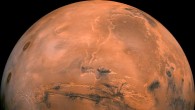
The Tunable Laser Spectrometer (TLS) in the Sample Analysis at Mars (SAM) chemistry lab onboard NASA’s Curiosity rover has detected atmospheric methane...
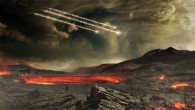
Asteroid material in chondritic Vigarano class alteration type 3 (CV3) meteorites provide a good record of complex chemistry present when or before our...
The recent suggestion of phosphine gas in the atmosphere of Venus has regenerated interest in the idea of life in clouds; however, such analyses usually...
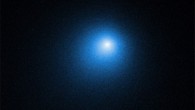
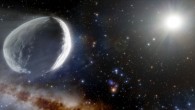
Comet Bernardinelli-Bernstein, which is between 100 and 200 km (62-124 miles) across, will make its closest approach to the Sun in 2031, according to an...
A team of astronomers from Cornell University and the American Museum of Natural History has identified 1,715 stars within 100 parsecs (326 light-years)...
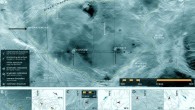
Using data collected by the synthetic aperture radar on NASA’s Magellan spacecraft, a team of planetary researchers has identified a pattern of tectonic...
In a new study published in the journal Geoscience Frontiers, a team of U.S. researchers analyzed the ages of 89 well-dated geological events of the last...
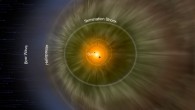
Astronomers using NASA’s Interstellar Boundary Explorer (IBEX) satellite have mapped the boundary of the heliosphere, the vast region of space surrounding...