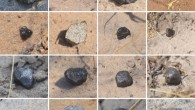
2018 LA, a 1.5-m-wide asteroid that disintegrated harmlessly over Botswana, Africa, just hours after its discovery on June 2, 2018, is only the second...
Reconstructing the emergence and weathering of Earth’s continental crust in the Archean eon is crucial for our understanding of early ocean chemistry,...
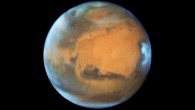
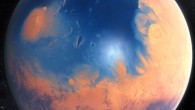
Mars is cold today but once had water lakes and flowing rivers. The early warm climate cannot be explained by basic models of the early Mars greenhouse...
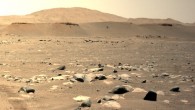
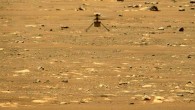
NASA’s Ingenuity helicopter took off at 4:31 a.m. EDT (1:31 a.m. PDT), or 12:33 p.m. local Mars time, on April 25, 2021, rising 5 m (16 feet); then it...
On April 20, 2021, the Mars Oxygen In-Situ Resource Utilization Experiment (MOXIE) instrument aboard NASA’s Perseverance rover converted some of carbon...
Lasting 51.9 seconds, Ingenuity’s experimental flight on April 22, 2021, added several new challenges to its first flight, including a higher maximum...
Mars had drier and wetter eras before drying up completely in the Hesperian period, about 3 billion years ago, according to an analysis of observational...
In a new paper published in the journal Earth and Planetary Science Letters, an international team of researchers presents the results from a long-term...
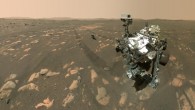
Perseverance took a selfie with the Ingenuity helicopter, seen here 4 m (13 feet) away in this image from April 6, 2021.
This image was taken by the WATSON...
Using data from the Atacama Large Millimeter/Submillimeter Array (ALMA), astronomers from India have detected acetone, disulfur monoxide, and carbon monoxide...
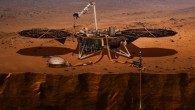
On March 7 and 18, 2021, NASA’s InSight lander detected 3.3- and 3.1-magnitude marsquakes originating in a location called Cerberus Fossae, further supporting...
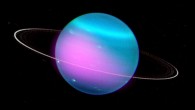
Uranus, the seventh planet from the Sun, and its ring system appear to mainly produce X-ray emission by scattering solar X-rays, but some may also come...
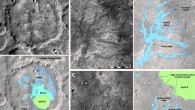
A 54-km- (33.5-mile) diameter Noachian-aged crater with neither inlet nor outlet channels is distinct from previously documented crater basin lakes on...
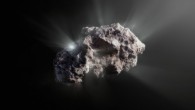
Two teams of astronomers have performed polarimetric observations of 2I/Borisov, the first active extrasolar comet ever detected in our Solar System, using...
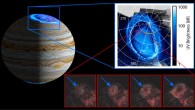
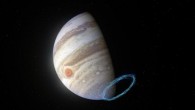
Planetary scientists using data from the Ultraviolet Spectrograph (UVS) aboard NASA’s Juno spacecraft have discovered expanding emission circles of ultraviolet...
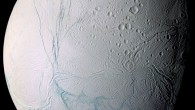
A novel theory proposed by planetary scientists from Caltech and NASA’s Jet Propulsion Laboratory challenges the current thinking that the saltwater...
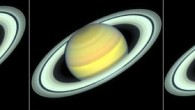
Astronomers using the NASA/ESA Hubble Space Telescope observed Saturn, the second largest planet in our Solar System, in 2018, 2019, and 2020, just after...
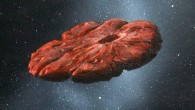
1I/‘Oumuamua, a strange object of extrasolar origin discovered on October 19, 2017 by the Pan-STARRS 1 telescope, was small, about half as long as a...