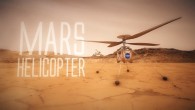
The Mars Helicopter, a technology demonstration that will travel to the Red Planet with NASA’s Mars 2020 rover, will attempt controlled flight in the...
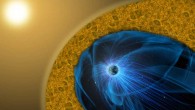
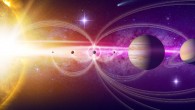
Earth is surrounded by a protective magnetic environment, the magnetosphere, which deflects a supersonic stream of charged particles from the Sun, known...
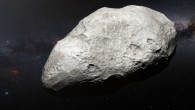
An international team of astronomers has found that a small Kuiper Belt object called 2004 EW95 is a carbonaceous (carbon-rich) asteroid — the first...
A research team led by Rutgers University’s Professor Dennis Kent has documented a gradual shift in Earth’s orbit that repeats regularly every 405,000...
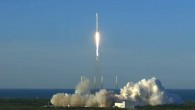
NASA’s Mars InSight mission successfully launched today at 7:05 a.m. EDT (4:05 a.m. PDT) from Space Launch Complex 3 at Vandenberg Air Force Base, California,...
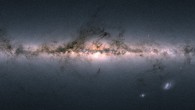
ESA’s Gaia mission has released the largest catalogue ever of Milky Way stars. It includes the positions on the sky for approximately 1.7 billion stars,...
NASA’s Juno mission took its twelfth trip around Jupiter on April 1, 2018, and the orbiter has sent back extraordinary images of the gas giant.
This...
Astronomers using the Gemini North Telescope on Hawaii’s Maunakea have detected hydrogen sulfide, the gas that gives rotten eggs their distinctive odor,...
A colossal impact between proto-Mars and a Vesta-to-Ceres-sized object likely produced the two Martian moons, Phobos and Deimos, according to new research.
Mars...
NASA’s Transiting Exoplanet Survey Satellite (TESS) was delivered to space Wednesday, April 18, aboard a SpaceX Falcon 9 rocket that lifted off from...
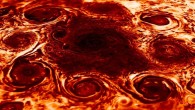
Researchers on NASA’s Juno mission shared a 3D infrared movie depicting densely packed cyclones and anticyclones that permeate the north polar region...
In the search for alien life, astrobiologists have turned over all sorts of rocks. For example, Mars has geological features that suggest it once had subsurface...
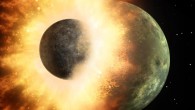
The high-energy impact about 100 million years after our Solar System formed, resulted in the two colliding planetary objects completely merging to create...
An international team of astronomers has discovered a planetary system containing at least three massive planets, orbiting the bright late-G/early-K-type...
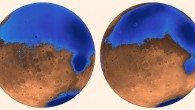
A team of geophysicists at the University of California, Berkeley, proposes that Martian oceans originated several hundred million years earlier than thought,...