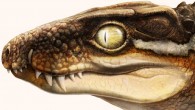
A new genus and species of sebecosuchian crocodyliform that roamed Earth during the Cretaceous period has been identified from a partial skeleton found...
A cut-marked eagle phalange recovered from Foradada Cave in Spain suggests that Iberian Neanderthals used the birds’ talons as bead-like objects.
The...
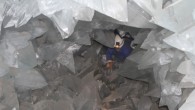
In a paper published in the journal Geology, Dr. Juan Manuel García-Ruiz from the Universidad de Granada and colleagues reveal the geological history...
A new study that analyzed dental evolutionary rates in early Neanderthals from Sima de los Huesos, a cave site in Atapuerca Mountains, Spain, found that...
As far back as 40,000 years ago (Upper Paleolithic), ancient people kept track of time using relatively advanced knowledge of astronomy.
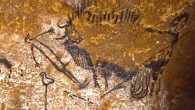
The Lascaux Shaft...
Some 7,000 years ago, inhabitants of a small settlement at the Early Neolithic waterlogged site of La Draga (Girona, Spain) dried non-edible fungi for...
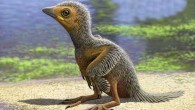
The tiny fossil of a juvenile enantiornithe bird from the Early Cretaceous La Huérguina Formation of Spain is helping paleontologists understand how early...
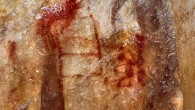
A new study shows that paintings in three cave sites on the Iberian Peninsula — a red linear motif in Cave of La Pasiega, a hand stencil in Maltravieso...
A new large species of giraffid being named Decennatherium rex has been discovered by Dr. Maria Rios from the National Museum of Natural History of Spain...
The aboriginal inhabitants of the Canary Islands, commonly known as Guanches, were genetically most similar to modern North African Berbers, according...
An analysis of ancient DNA entrapped in Neanderthal dental calculus (calcified dental plaque) has revealed the complexity of Neanderthal behavior, including...
An international team of paleobiologists has uncovered the fossil of a 105-million-year-old gymnosperm pollinating beetle, named Darwinylus marcosi. The...
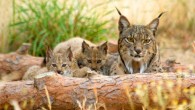
A team of researchers in Spain has successfully sequenced and analyzed the genome of the Iberian lynx (Lynx pardinus), the world’s most endangered feline...
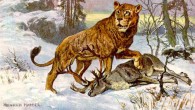
According to a new study, Stone Age humans may have hunted Eurasian cave lions (Panthera leo spelaea) for their pelts, perhaps contributing to their extinction.
Cave...
A team of astronomers from the UK is exploring what might be described as the first astronomical observing tool, potentially used by humans around 4,000...
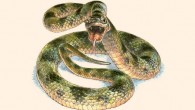
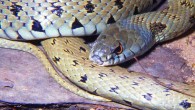
A green and black colubrid snake lived about 10 million years ago in what is today Spain, according to a team of scientists led by University College Cork...
The first analysis of nuclear DNA from Sima de los Huesos hominins, conducted by Dr. Matthias Meyer of the Max Planck Institute for Evolutionary Anthropology...
An international team of scientists from Czech Republic, France and Germany has identified a cryptic new species of grass snake living in the North African...