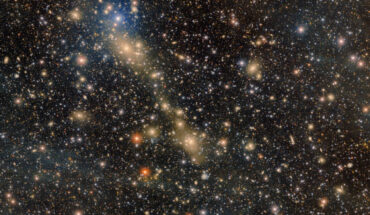
Intracluster light is a diffuse glow of stars stripped from galaxies during a galaxy cluster’s formation. Abell 3667 is featured in this DECam image. Image credit: CTIO / NOIRLab / NSF / AURA / Anthony Englert, Brown University / T.A. Rector, University of Alaska Anchorage & NSF’s NOIRLab / M. Zamani & D. de Martin, NSF’s NOIRLab. Galaxy clusters contain thousands of galaxies of all ages, shapes and sizes. Typically, they have a mass...