Featured News

May 25, 2026 by News Staff

New research led by scientists from the French National Institute for Agriculture, Food, and Environment (INRAE) suggests cows (Bos taurus taurus) can distinguish between known and unknown people, and even match a familiar voice to the correct face. Amichaud et al. found that cows not only recognize human faces, but can connect them with familiar voices. Image credit: NeiFo. “Cows are social animals and were domesticated 10,500 years ago,” said...

May 21, 2026 by News Staff

Paleontologists have described a gigantic new species of mosasaur — stretching up to 13.2 m (43 feet) long and armed with serrated teeth —...

May 20, 2026 by News Staff

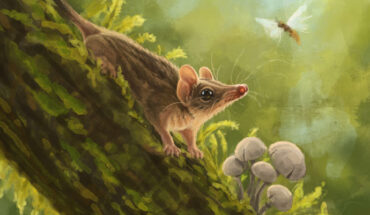
Paleontologists have described three previously unknown species of multituberculate mammals — named Camurodon borealis, Qayaqgruk peregrinus, and...

May 18, 2026 by Natali Anderson

When an antenna of the house cricket (Acheta domesticus) is touched with a heated probe, something curious happens: the insect turns its attention to the...

May 15, 2026 by Enrico de Lazaro

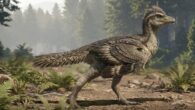
A large tyrannosaurid dinosaur may have stalked the floodplains of what is now New Mexico nearly 74 million years ago, according to a team of paleontologists...

May 15, 2026 by Sergio Prostak

Scientists have extracted and analyzed proteins from the tooth enamel of six Homo erectus individuals who lived in China roughly 400,000 years ago, offering...

May 14, 2026 by Enrico de Lazaro

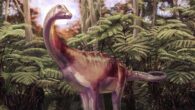
Paleontologists have identified a new genus and species of somphospondylan titanosauriform dinosaur — the largest ever found in Southeast Asia —...

May 8, 2026 by Natali Anderson

A comprehensive new review by Field Museum of Natural History paleontologists draws together the latest fossil evidence — including analysis of five...

May 6, 2026 by Enrico de Lazaro

Long-overlooked fossils in the Western Australian Museum collection have been identified as a new species of koala. Named Phascolarctos sulcomaxilliaris,...

May 5, 2026 by Natali Anderson

A new study by Texas A&M University scientists offers fresh clues to a long-standing puzzle: why people who drink coffee tend to live longer and develop...

May 1, 2026 by Enrico de Lazaro

A set of neoazhdarchian pterosaur footprints discovered in South Korea is offering a rare glimpse into how some of the largest flying reptiles may have...

Apr 29, 2026 by Enrico de Lazaro

Paleontologists have descibed a new species of the multituberculate mammal genus Cimolodon based on a fossil found in Baja California, Mexico. An illustration...

Apr 29, 2026 by Natali Anderson

A comprehensive genome-wide analysis of Amazonian two-toed sloths (genus Choloepus) suggests the animals are more genetically diverse than once believed,...

Apr 28, 2026 by News Staff

New fossils from the Namba Formation of South Australia reveal that 25 million years ago, Obdurodon insignis — a larger, tooth-bearing ancestor of...

Apr 27, 2026 by Kenneth C. Gass

If you’ve ever wondered how geologists know so much about ancient beaches and shallow oceans — from the paleoenvironment to the animals roaming...

Apr 24, 2026 by Natali Anderson

In the lightless depths of the Gulf of Alaska, approximately 3,251 m (two miles) below the surface, a softball-sized golden object clinging to a rock left...

Apr 23, 2026 by Enrico de Lazaro

Paleontologists in Brazil have identified a new genus and species of hyperodapedontine rhynchosaur — an extinct lineage of beaked, herbivorous reptiles...

Apr 20, 2026 by Enrico de Lazaro

CT scans of a decades-old specimen from the Yale Peabody Museum of Natural History show a new species of short-snouted crocodylomorph with unusually strong...

Apr 20, 2026 by News Staff

New research by Professor Enrique Gaztañaga from the University of Portsmouth and the Institute of Space Sciences in Barcelona suggests some black holes...

Apr 17, 2026 by Enrico de Lazaro

A new genus and species of carnivorous herrerasaurian dinosaur has been described from an incomplete but well-preserved skull found in northern New Mexico,...