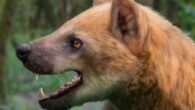
When paleoanthropologists announced the discovery of Homo floresiensis on the Indonesian island of Flores in 2003, the tiny, small-brained species quickly...
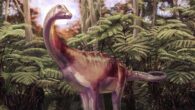
A small fossil collected on an Antarctic island more than four decades ago is a tail vertebra of a titanosaurian sauropod dinosaur that roamed Antarctica...
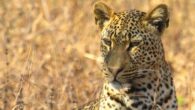
Named Panthera pardus burgtonnae, the newly-identified leopard subspecies roamed Europe during the Eemian interglacial period and was far more heavily...
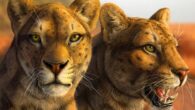
A nearly complete skull unearthed decades ago in Arizona has given paleontologists their clearest look yet at Adelphailurus kansensis, an enigmatic felid...
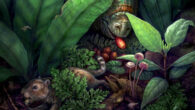
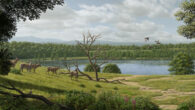
Fossils from the Jose Creek Formation in New Mexico reveal that angiosperms (flowering plants) had built dense, fruit-bearing forests nearly 75 million...
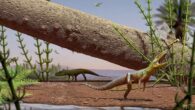
Paleontologists working in Brazil have identified a previously unknown species of archosauriform that lived about 240 million years ago and may belong...
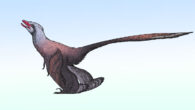
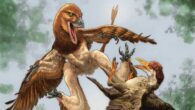
A new genus and species of four-winged pennaraptoran dinosaur from the Early Cretaceous of northern China is adding another twist to the story of how birds...
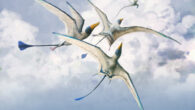
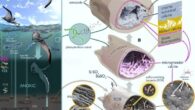
A 113-million-year-old pterosaur fossil from northeastern Brazil has yielded rare evidence of soft tissues, organic molecules and chemical traces of a...
Paleontologists from the Field Museum of Natural History have described the fossilized remains of baby embolomeres, crocodile-like predators that prowled...
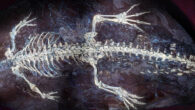
Exceptionally preserved skin of Montsecosuchus depereti, an extinct crocodylomorph no larger than a house cat that prowled the tropical wetlands of Early...
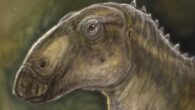
An international team of paleontologists from Romania, Hungary and Italy has identified a new genus and species of herbivorous, duck-billed dinosaur from...
Deep inside a limestone cave in southern China, paleontologists have uncovered an assemblage of thirteen fossilized teeth belonging to Gigantopithecus...
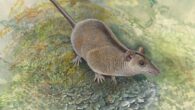
Paleontologists have described a new genus and three new species of small, insect-eating marsupials from the Early Miocene deposits of the Riversleigh...
Paleontologists have identified a previously unknown species of amphicyonid — the extinct family of carnivorous mammals popularly known as bear-dogs...
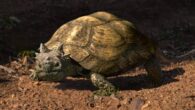
Paleontologists have identified a new species of meiolaniform turtle from northern Patagonia, Argentina, that lived during the Maastrichtian age, just...
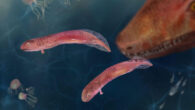
Around 66 million years ago, the end-Cretaceous extinction event reshaped Earth’s biodiversity, yet its impact on marine fishes remains debated due to...
Near-complete bovine skeletons unearthed the Early Pliocene site of Camp dels Ninots in northeastern Spain reveal that the ancestors of today’s buffalo...
Jian changmaensis is the first non-avian dinosaur found at a paleontological site that has yielded more than 100 specimens of Early Cretaceous birds.
Jian...