Dr. Ian Towle, a researcher with the Biomedicine Discovery Institute at Monash University, proposes folding nearly 5 million years of hominin fossils into...
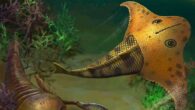
Paleontologists in China have identified a new species of armored, jawless fish from rocks around 419 million years old whose skull was shaped like the...
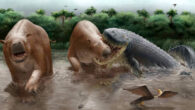
Paleontologists have uncovered the first direct physical evidence that colossal prehistoric crocodiles hunted large plant-eating mammals in what is now...
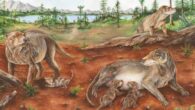
Paleontologists studying a 236-million-year-old cynodont fossil from Argentina say they have found the earliest evidence yet of viviparity (live birth)...
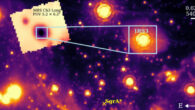
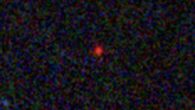
Roughly 660 million years after the Big Bang, a strange bright red spot has been hiding in plain sight in one of the deepest fields ever imaged by the...
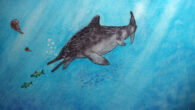
For more than a century, paleontologists studying the Late Jurassic seas that once covered southern Germany believed only one species of ichthyosaur, Aegirosaurus...
A new analysis of three skull fragments unearthed at the Gran Dolina cave site in Spain indicates that Homo antecessor had bone thickness closer to that...
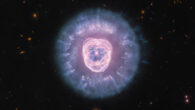
New infrared observations of the Eskimo Nebula, a bipolar double-shell planetary nebula in the constellation of Gemini, reveal clumps of dust, ionized...
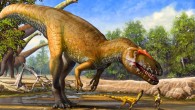
Dinosaurs evolved into some of the largest animals ever to walk the Earth, but a new mathematical model suggests that early mammals may have crowded them...
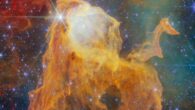
A stunning new image from the NASA/ESA/CSA James Webb Space Telescope reveals a comet-shaped cloud in the Carina Nebula hiding a cluster of about 70 young...
Planetary researchers analyzing images from NASA’s New Horizons spacecraft have found evidence that liquid nitrogen may still be seeping up from beneath...
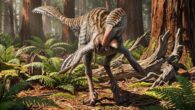
Paleontologists have described a new genus of small, bird-like dinosaur that lived in what is now New Mexico approximately 73 million years ago.
Life reconstruction...
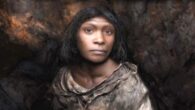
Neanderthals vanished roughly 42,000 years ago, but a piece of their biology appears to be quietly at work in some people today, according to a new study...
A team of researchers from the University of Sydney and the University of Glasgow argues that dietary sugars, not animal foods, may have played the decisive...
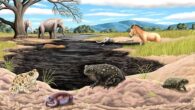
Paleontologists studying the La Brea Tar Pits, one of the world’s richest Ice Age fossil sites, have identified a previously unknown species of spadefoot...
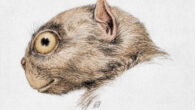
Paleontologists working in southern Wyoming have identified a previously unknown species of omomyid primate, adding a new chapter to the story of one of...
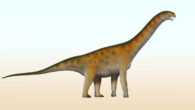
Paleontologists working in southern China have identified a new species of sauropod dinosaur that appears to belong to a group never before documented...
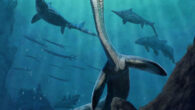
An exquisitely preserved specimen of Austronaga minuta, a small, long-necked marine reptile from the Triassic of China, contains a fossilized stomach,...