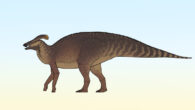
A new genus and species of lambeosaurine hadrosaurid dinosaur has been identified in southern Alberta, Canada, dating back 77 million years to the Campanian...
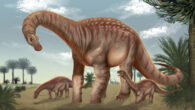
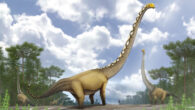
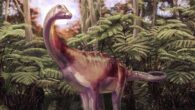
Paleontologists in Uruguay have identified a new species of aeolosaurine titanosaur from a pair of remarkably well-preserved tailbones unearthed in the...
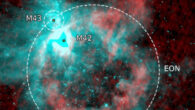
Using the Karl G. Jansky Very Large Array (VLA) s and the Five-hundred-meter Aperture Spherical Radio Telescope (FAST), astronomers have created the sharpest-ever...
Paleontologists working in northeastern Thailand have identified a new species of mamenchisaurid sauropod dinosaur, offering fresh evidence that a group...
Using the upgraded GRAVITY+ instrument on ESO’s Very Large Telescope Interferometer (VLTI), astronomers have measured the ratio of carbon isotopes in...
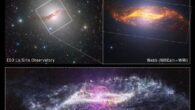
Celebrating four years of science, the NASA/ESA/CSA James Webb Space Telescope has pierced the thick dust of the giant galaxy Centaurus A to reveal its...
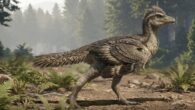
Paleontologists in China have described a small, previously unknown Jurassic bird whose short tail offers new evidence for how the earliest birds traded...
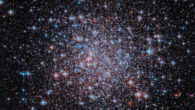
Astronomers using the NASA/ESA Hubble Space Telescope have captured this vivid image of NGC 6426, an ancient globular cluster in the Milky Way’s outer...
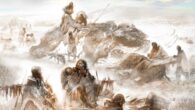
New research suggests that the first widespread human cultures in the Americas were not opportunistic foragers who ate whatever they could find, but specialized...
For decades, the discovery of stone spear points lying next to proboscidean (mammoth, mastodon, and gomphothere) bones has been treated as archaeology’s...
When paleoanthropologists announced the discovery of Homo floresiensis on the Indonesian island of Flores in 2003, the tiny, small-brained species quickly...
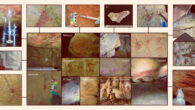
For the first time, researchers have extracted ancient human DNA directly from the walls of a cave. Although their results do not conclusively link ancient...
A small fossil collected on an Antarctic island more than four decades ago is a tail vertebra of a titanosaurian sauropod dinosaur that roamed Antarctica...
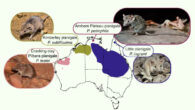
Scientists in Australia have revealed that what was long thought to be a single widespread planigale species is actually four distinct ones, including...