Paleontology News

Jun 10, 2026 by News Staff

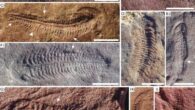
Fossils from some of the oldest-known animals on Earth, dating from 574 million years ago (Ediacaran period), suggest that cloning, not competition, dominated the Ediacaran seas, slowing evolution until environmental stress helped drive the rise of sexual reproduction and a burst of biodiversity. Artist’s reconstruction of the Fractofusus community: the bottom right features a large Fractofusus around which there are 5 to 8 medium specimens clustered;...

Jun 9, 2026 by Enrico de Lazaro

Paleontologists have identified a new species of meiolaniform turtle from northern Patagonia, Argentina, that lived during the Maastrichtian age, just...

Jun 5, 2026 by News Staff

Around 66 million years ago, the end-Cretaceous extinction event reshaped Earth’s biodiversity, yet its impact on marine fishes remains debated due to...

Jun 5, 2026 by News Staff

Near-complete bovine skeletons unearthed the Early Pliocene site of Camp dels Ninots in northeastern Spain reveal that the ancestors of today’s buffalo...

Jun 4, 2026 by Enrico de Lazaro

Jian changmaensis is the first non-avian dinosaur found at a paleontological site that has yielded more than 100 specimens of Early Cretaceous birds. Jian...

Jun 4, 2026 by News Staff

Paleontologists have confirmed that Praearcturus gigas, a creature that prowled shallow waters during the Devonian period, 415 million years ago, is the...

Jun 3, 2026 by News Staff

Tiny colonial animals called bryozoans were long thought to have appeared tens of millions of years after the Cambrian explosion. Extraordinary fossils...

Jun 2, 2026 by News Staff

Chemical traces preserved in ancient rocks indicate that marine environments were deteriorating long before the catastrophe that wiped out vast numbers...

Jun 1, 2026 by Sergio Prostak

Paleontologists have identified a new species of the axolotl genus Ambystoma from several fossilized specimens found deep in the rocky outcrops of the...

May 29, 2026 by News Staff

Paleontologists have recovered the fossilized remains of three hyaenodont species, including one previously unknown to science, from Miocene sediments...

May 29, 2026 by News Staff

A new species of corcoraniid arthropod that lived during the Furongian epoch, between 497 and 487 million years ago, has been identified from an exceptionally...

May 29, 2026 by News Staff

Paleontologists in Argentina have identified a previously unknown species of unenlagiid dinosaur that stalked freshwater wetlands during the Late Cretaceous...

May 28, 2026 by News Staff

By studying fungal microfossils in 66-million-year-old rock samples from the Denver Basin in Colorado, Johns Hopkins University microbiologists have confirmed...

May 28, 2026 by News Staff

Named Plumadraco bankoorum, the newly-described species of enantiornithine bird lived in what is now northeastern China during the Cretaceous period, roughly...

May 27, 2026 by Enrico de Lazaro

Paleontologists have described a new species of bipedal shuvosaurid archosaur from New Mexico, shedding light on a group of creatures that roamed North...

May 27, 2026 by News Staff

Analyzing 1.75-billion-year-old microfossils from ancient Australian seabeds, paleontologists say ancient eukaryotes — the ancestors of every plant,...

May 25, 2026 by Enrico de Lazaro

Paleontologists in Canada say they have recovered a dinosaur tail vertebra from 75- to 80-million-year-old marine rocks on a small island off the coast...

May 22, 2026 by Enrico de Lazaro

Paleontologists have identified a new genus and species of pan-shinisaur lizard from a partial upper jaw discovered in southern France, pushing the presence...

May 21, 2026 by News Staff

Paleontologists have described a gigantic new species of mosasaur — stretching up to 13.2 m (43 feet) long and armed with serrated teeth —...

May 20, 2026 by News Staff

Researchers have discovered stromatolites — layered structures formed by microbial communities — inside a 42,000-year-old asteroid crater in...