Paleontology News

May 28, 2026 by News Staff

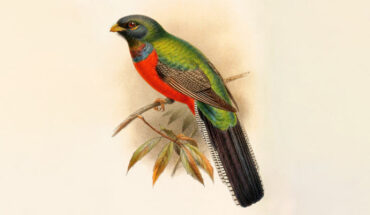
Named Plumadraco bankoorum, the newly-described species of enantiornithine bird lived in what is now northeastern China during the Cretaceous period, roughly 121 million years ago. Plumadraco bankoorum is a new bohaiornithid enantiornithine bird with a pair of exceptionally long rectrices. Image credit: Ville Sinkkonen. Plumadraco bankoorum belonged to the enantiornithines, the most diverse clade of birds during the Cretaceous period, a group that...

May 27, 2026 by Enrico de Lazaro

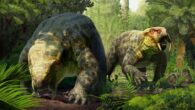
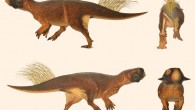
Paleontologists have described a new species of bipedal shuvosaurid archosaur from New Mexico, shedding light on a group of creatures that roamed North...

May 27, 2026 by News Staff

Analyzing 1.75-billion-year-old microfossils from ancient Australian seabeds, paleontologists say ancient eukaryotes — the ancestors of every plant,...

May 25, 2026 by Enrico de Lazaro

Paleontologists in Canada say they have recovered a dinosaur tail vertebra from 75- to 80-million-year-old marine rocks on a small island off the coast...

May 22, 2026 by Enrico de Lazaro

Paleontologists have identified a new genus and species of pan-shinisaur lizard from a partial upper jaw discovered in southern France, pushing the presence...

May 21, 2026 by News Staff

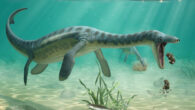
Paleontologists have described a gigantic new species of mosasaur — stretching up to 13.2 m (43 feet) long and armed with serrated teeth —...

May 20, 2026 by News Staff

Researchers have discovered stromatolites — layered structures formed by microbial communities — inside a 42,000-year-old asteroid crater in...

May 20, 2026 by News Staff

Paleontologists have described three previously unknown species of multituberculate mammals — named Camurodon borealis, Qayaqgruk peregrinus, and...

May 20, 2026 by News Staff

Paleontologists from University College London and the University of Cambridge say the large predatory dinosaurs’ tiny arms evolved alongside massive...

May 19, 2026 by Enrico de Lazaro

Paleontologists have described a new genus and species of early monofenestratan pterosaur based on a nearly complete and well-preserved fossil skeleton...

May 15, 2026 by Enrico de Lazaro

A large tyrannosaurid dinosaur may have stalked the floodplains of what is now New Mexico nearly 74 million years ago, according to a team of paleontologists...

May 14, 2026 by Enrico de Lazaro

Paleontologists have identified a new genus and species of somphospondylan titanosauriform dinosaur — the largest ever found in Southeast Asia —...

May 13, 2026 by News Staff

Fossils of a giant tortoise, a ground sloth, a lion-sized armadillo relative called pampathere, scimitar-toothed cats, horses, camels and mastodons found...

May 12, 2026 by News Staff

A new analysis of 470 flowering plant species finds that whole-genome duplication surged precisely during Earth’s violent environmental crises, suggesting...

May 11, 2026 by Enrico de Lazaro

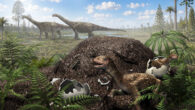
Fossils unearthed on a remote Argentine ranch belong to a new genus and species of macronarian sauropod dinosaur, according to an international team of...

May 11, 2026 by News Staff

An analysis of wear on the fossilized teeth of the hadrosaurian dinosaur Maiasaura peeblesorum indicates their juveniles may have eaten softer, more nutritious...

May 8, 2026 by Natali Anderson

A comprehensive new review by Field Museum of Natural History paleontologists draws together the latest fossil evidence — including analysis of five...

May 6, 2026 by Enrico de Lazaro

Long-overlooked fossils in the Western Australian Museum collection have been identified as a new species of koala. Named Phascolarctos sulcomaxilliaris,...

May 6, 2026 by News Staff

New research led by Aarhus University paleontologists overturns the image of tyrannosaurs as pure apex predators. An analysis of 16 precisely mapped bite...

May 6, 2026 by News Staff

A new hypothesis proposes that the Cambrian Explosion — the sudden burst of animal diversity 500 million years ago — was not driven by shells...