Oxygen levels fluctuated dramatically for about 200 million years after the start of the Great Oxidation Event, with permanent atmospheric oxygenation...
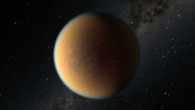
A new study published in the Journal of Geophysical Research: Planets is a first step toward a generalized theory of how precipitation and condensible...
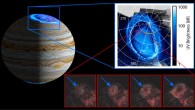
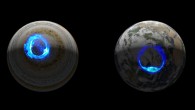
Planetary scientists using data from the Ultraviolet Spectrograph (UVS) aboard NASA’s Juno spacecraft have discovered expanding emission circles of ultraviolet...
Using data from NASA’s Transiting Exoplanet Survey Satellite (TESS) and the HARPS-N spectrograph at the 3.6-m Telescopio Nazionale Galileo, astronomers...
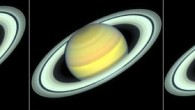
Astronomers using the NASA/ESA Hubble Space Telescope observed Saturn, the second largest planet in our Solar System, in 2018, 2019, and 2020, just after...
Dawn storms consist of short-lived but intense brightening and broadening of Jupiter’s main auroral oval near where the atmosphere emerges from darkness...
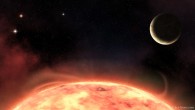
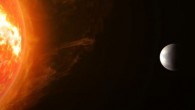
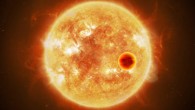
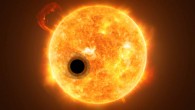
Using the NASA/ESA Hubble Space Telescope, astronomers have found evidence of volcanic activity reforming the atmosphere of Gliese 1132b, a rocky exoplanet...
Astronomers from the CARMENES (Calar Alto high-Resolution search for M dwarfs with Exoearths with Near-infrared and optical Échelle Spectrographs) consortium...
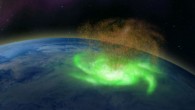
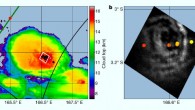
Hurricanes in the Earth’s low atmosphere are well known; however, disturbances resembling hurricanes had never before been detected in the upper atmosphere.
An...
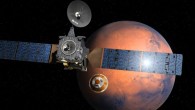
The source of hydrogen chloride (HCl) in the atmosphere of Mars is recent surface volcanism, subsurface magmatic activity, or aerosol chemistry occurring...
Astronomers have detected lithium in the atmospheres of four cool and old white dwarfs, of which one also displayed atmospheric potassium. The relative...
A team of astronomers from the University of Groningen, the University of Edinburgh, and SRON Netherlands Institute for Space Research has detected chromium...
Using the Atmosphere-Space Interactions Monitor (ASIM) observatory on the International Space Station (ISS), researchers have observed five intense blue...
A transiting gas giant called WASP-62b has a cloud- and haze-free atmosphere, according to new research.
An artist’s illustration of the hot-Jupiter...
With a mass of 1.8 Neptune masses and a radius of Jupiter, WASP-107b presents a challenge to planet formation theories.
An artist’s impression of WASP-107b....
NGTS-14Ab, an alien world slightly larger than Neptune orbiting around an orange dwarf in the binary system NGTS-14, joins a growing number of exoplanets...
New observations from NASA’s Transiting Exoplanet Survey Satellite (TESS) have revealed the presence of high-speed jets, zonal circulation and polar...
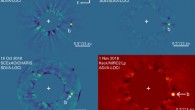
Using the Subaru Telescope and the Keck II telescope at the W. M. Keck Observatory, astronomers have discovered and directly imaged a brown dwarf orbiting...
Astronomers using data from NASA’s Transiting Exoplanet Survey Satellite (TESS) have discovered two exoplanets transiting inactive red dwarf stars TOI-122...