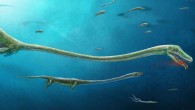
The first ever evidence of live birth in a group of animals previously thought only to lay eggs has been discovered by an international team of paleontologists...
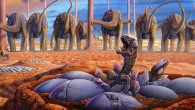
Non-avian dinosaur eggs took a long time to hatch — between 3 and 6 months, according to new research on the teeth of fossilized dinosaur embryos.
Herds...
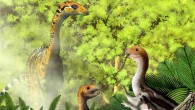
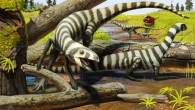
An international team of paleontologists has discovered that Limusaurus inextricabilis, a species of Jurassic dinosaur, lost its teeth in adolescence and...
Herbivorous, or plant-eating, mammals have bigger bellies than their usually slim carnivorous counterparts, according to a study led by University of Zurich...
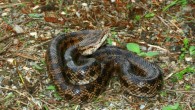
According to a new study published in the journal Molecular Phylogenetics and Evolution, the yellow-bellied kingsnake (Lampropeltis calligaster), a snake...
212-million-year-old fossils discovered in New Mexico confirm that Drepanosaurus, a Late Triassic tree-dwelling reptile, was a small-bodied creature with...
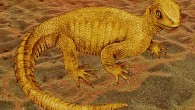
Paleontologists have described a completely unexpected new species of reptile that lived 230 million years ago (Triassic period).
Dr. Stocker and co-authors...
The first major study of visual pigment genes and lenses in snakes has found that the reptiles match their vision to their lifestyles.
The Montpellier...
Nearly two years ago, an international team of paleontologists discovered a bizarre fossil — Atopodentatus unicus, a 10 feet (3 m) long marine reptile...
In a paper published in the journal Genetics, scientists from the University of North Dakota and the University of Minnesota present multiple lines of...
A new study led by Dr. Gilles Laurent from the Max Planck Institute for Brain Research in Frankfurt, Germany, reveals slow-wave (SW) and rapid eye movement...
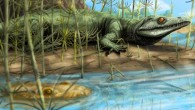
Fossil remains of a previously unknown species of reptile that lived about 250 million years ago (Triassic period) have been found in the Brazilian state...
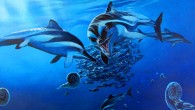
According to a new research published in the journal Nature Communications, ichthyosaurs were driven to extinction by climate change and their own failure...
With the help of ancient fossils unearthed in northeastern Brazil, an international team of paleontologists has identified several amphibian species and...
A team of paleontologists has discovered a new species of turtle-like reptile that lived in what is now Germany during the Middle Triassic period, approximately...
A group of paleontologists, led by Catherine Klein from the University of Bristol, UK, has put together the remains of a new small species of prehistoric...
A team of paleontologists headed by Dr Sterling Nesbitt of Virginia Tech has described a new genus and species of archosaur that lived in what is today...
Paleontologists led by Dr Xiao-hong Chen of the China Geological Survey’s Wuhan Center have discovered a new species of marine reptile that lived in...
Dinosaurs fit in between warm-blooded mammals and cold-blooded reptiles, according to a study reported in the journal Science. The study is the first to...