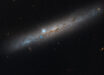
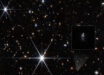
Officially named C/2026 S1 (Euclid), the comet turned up in images Euclid captured between September 16 and 24, 2026.
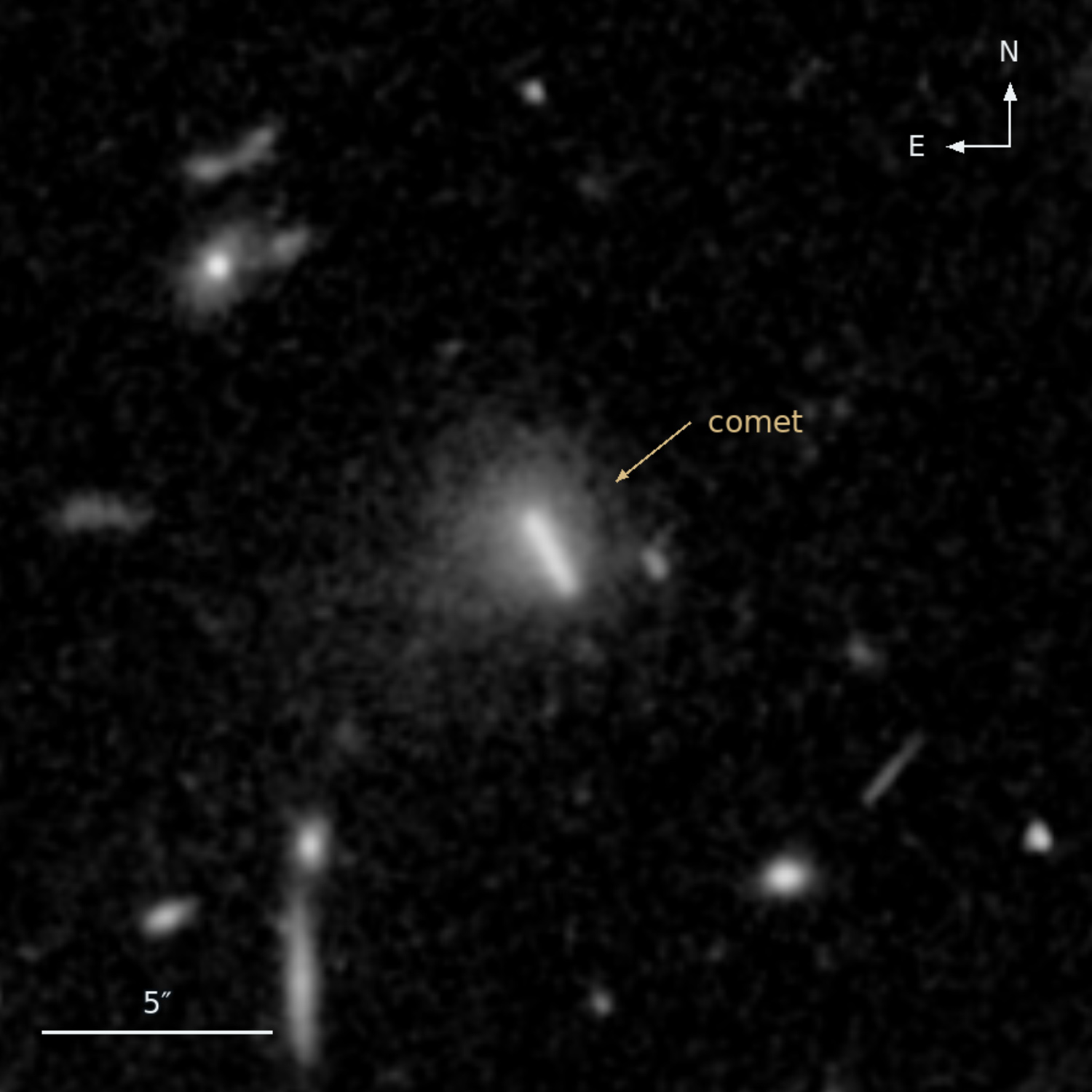
This Euclid shows the comet C/2026 S1 (Euclid). Image credit: ESA / Euclid / Euclid Consortium / NASA / Pöntinen et al.
C/2026 S1 (Euclid) is currently about 1.3 billion km (800 million miles) from Earth, roughly the distance between the orbits of Jupiter and Saturn.
The comet sits well above the plane of the planets and travels an orbit that will take thousands of years to complete. Its exact period will be refined as more observations come in.
The discovery was made by Mikko Pöntinen, a Ph.D. student at the University of Helsinki, working with the Solar System Objects Science Working Group of the Euclid Consortium.
“I was excited to see my software flag a ‘streak’ smeared across several images — the result of a fast-moving object,” Pöntinen said.
“By predicting its position I could identify it in other images, in total finding it in five image sets.”
“Further inspection revealed that it had a fuzzy cloud around it, indicative of an active object like a comet that is shedding dust and gas.”
The discovery is a surprise because Euclid is designed to stare at distant galaxies, not to chase objects in our own Solar System.
The telescope also deliberately avoids the dusty band of sky along the planetary plane, where most comets and asteroids lurk, and it typically images each patch of sky only once.
“Very few comets are expected to be discovered by Euclid so it was a happy coincidence that the combination of the comet’s orbit and Euclid’s scanning over those days captured the object in multiple images,” said Euclid archive scientist Dr. Bruno Altieri.
“While this particular comet is not a suitable candidate for Comet Interceptor, the process of discovery and alert gives us a real test case for how our two mission teams will coordinate in the future.”
“And we are of course happy to have discovered a previously unknown comet for the Solar System community to follow-up on,” added Euclid project scientist Dr. Valeria Pettorino.